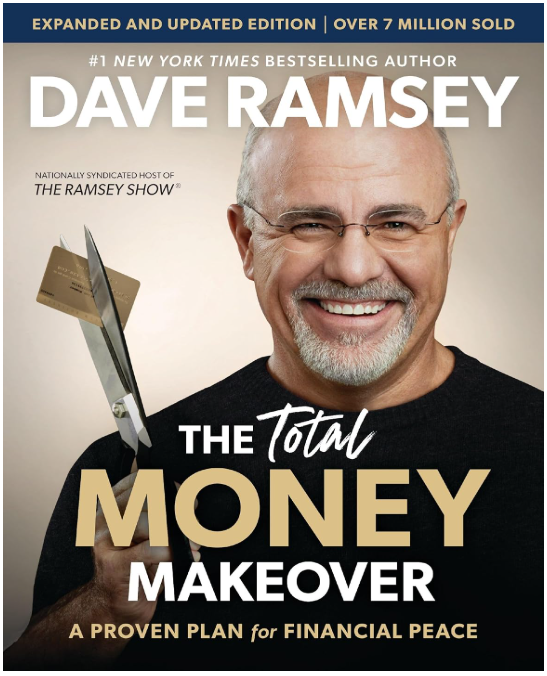
Pay minimum payments on everything. Then throw every extra dollar you can find at the smallest debt. When that debt is gone, take its payment and add it to the minimum payment on the next smallest debt. Then attack that one.
This is called the debt snowball. As you knock out each debt, your available payment grows—just like a snowball rolling downhill.
Why smallest-first instead of highest-interest?
Because personal finance is 80% behavior and 20% math. The debt snowball gives you quick wins. You see progress. You feel momentum. And momentum keeps you going.
Studies show the debt snowball has an 80% completion rate versus 20% for the mathematically optimal avalanche method. The best plan is the one you’ll actually finish.
Gazelle intensity: This is not a casual effort. This is selling stuff you don’t need, taking extra shifts, eating at home, cutting subscriptions, and living like no one else so later you can live like no one else.
Baby Step 3: Save 3–6 Months of Expenses for a Fully Funded Emergency Fund
Once the debt is gone, you shift from survival mode to security mode.
The goal: Save enough to cover 3–6 months of actual living expenses—not income, but what it actually costs you to live.
Why: Because it’s going to rain. In any given 10-year period, 78% of households experience a major negative financial event. Job loss. Medical crisis. Family emergency.
With a fully funded emergency fund, those events become inconveniences instead of catastrophes.
Where to keep it: In a high-yield savings account or money market account—liquid, accessible, but not too easy to touch. This is not an investment. It’s insurance.
How long it takes: Most people complete this step in 6–12 months of focused saving.
Once you’ve built your 3–6 month emergency fund, you’ve officially moved from survival mode to security mode. But here’s an important question: Now that you have cash in the bank, how do you protect yourself from the single biggest threat to long-term wealth—your own emotional decision-making? Market dips, economic uncertainty, and the fear of missing out can derail even the best financial plans. Before you take the next step into investing, it’s worth understanding 7 Mental Models to Beat FOMO and Build Real Wealth. These frameworks will prepare your mind for the wealth-building phase ahead.
Baby Step 4: Invest 15% of Your Household Income into Retirement
Now the wealth-building begins.
The goal: Put 15% of your gross household income into tax-advantaged retirement accounts.
Where to invest:
- 401(k) plans at work (especially if your employer matches)
- Roth IRAs (for tax-free growth and withdrawals)
- Traditional IRAs (for tax deductions now)
What to invest in: For most people, a simple target-date fund or a low-cost S&P 500 index fund is all you need. These funds are diversified, professionally managed, and require zero effort on your part.
The math: If you invest 15% of your income from age 30 to 65 at a 10% average return (the stock market’s historical average), you’ll have over $3.6 million—and that’s assuming you never get a raise.
Investing 15% of your income is the gateway to long-term wealth, but where should that money actually go? While index funds and target-date retirement accounts are excellent starting points, many people eventually want to diversify beyond traditional stocks and bonds. If you’re curious about how the wealthy build multiple income streams—including business ownership, real estate, and alternative investments—you might find value in Kevin O’Leary: The Unfiltered Blueprint for Building Wealth, Starting a Business, and Investing Wisely. It’s a look at what’s possible once your foundation is solid.
Baby Step 5: Save for Your Children’s College
This step happens simultaneously with Step 4.
The goal: Fund your kids’ education without going into debt.
The method: Use Education Savings Accounts (ESAs) or 529 plans. These accounts grow tax-free when used for qualified education expenses.
The reality check: Your child doesn’t need to go to an expensive private school. In-state tuition, community college, trade schools, and scholarships are all valid paths. What matters is that they graduate without debt.
What if they don’t go to college? You can transfer 529 funds to another family member without penalty. Or if they get scholarships, you can withdraw up to the scholarship amount penalty-free.
Baby Step 6: Pay Off Your Home Early
This is the step that separates the wealthy from the wannabes.
The goal: Eliminate your mortgage completely.
Why: Because the typical millionaire in America has a net worth of $1–5 million—and almost all of them have a paid-for house. It’s not fancy stocks or complicated investments. It’s a paid-off home and decades of consistent saving.
But what about the tax deduction? Let’s do the math. If you have a $200,000 mortgage at 5%, you pay $10,000 in interest annually. If you’re in the 22% tax bracket and you itemize, you save $2,200 in taxes. You’re sending $10,000 to the bank to avoid sending $2,200 to the government. That’s trading dollars for quarters.
Ninety percent of Americans take the standard deduction anyway—so the mortgage interest deduction doesn’t even apply to them.
But shouldn’t I invest instead? Study after study shows that the people who actually build wealth don’t leverage their homes to invest in the market. They pay off their houses, then invest the former house payment. That’s how you build real, lasting wealth.
Baby Step 7: Build Wealth and Give Generously
Now you’ve made it. No payments. A paid-for home. Retirement accounts growing. Money coming in that used to go out.
The goal: Build wealth and become outrageously generous.
What this looks like: You invest aggressively. You help your kids and grandkids. You give to causes you care about. You pay for someone’s light bill anonymously. You become the person who lifts others up.
And here’s the thing about generous people: they tend to prosper. Not because of some mystical law, but because generous people are other-centered, likable, and easy to work with. They get promoted. They attract opportunities. They build relationships that compound over time.
Baby Step 7 is where wealth building accelerates and generosity becomes a way of life. But for some, this stage also opens the door to entrepreneurship—starting a business, scaling an existing one, or investing in ventures that create even more freedom. If you’ve ever wondered how successful entrepreneurs think about pricing, customers, and growth, Why a Higher Price (and Friction) Actually Increases Sales offers a behind-the-scenes look at what actually works when you’re ready to build something bigger.
Why the Baby Steps Work
This plan isn’t complicated. It’s not sexy. It doesn’t involve crypto, day trading, or get-rich-quick schemes.
It works because it addresses the real problem: your behavior.
You can’t budget your way out of a spending problem. You can’t invest your way out of debt. You have to change how you think about money—and the baby steps force that change.
Your Choice: Keep Doing What You’re Doing, or Try Something Different
You’ve been sold a story your whole life. That debt is normal. That payments are inevitable. That you’ll always have a car note and credit card balances.
But you don’t have to live that way.
Millions of people have used these seven steps to get out of debt, build wealth, and change their family trees. They didn’t have special skills or lucky breaks. They just decided they were done being broke.
The question isn’t whether this plan works. The question is: Are you ready to work the plan?
Start with Baby Step 1. Save that $1,000. Then move to Baby Step 2 with gazelle intensity. And don’t stop until you’ve reached Baby Step 7.
Live like no one else now, so later you can live and give like no one else.