The One Question That Reveals Your Real Money Problem
On Purpose Podcast with Lewis Howes | March 4, 2026
You can have money in the bank and still feel broke. You can have a steady paycheck and still wake up anxious. You can look successful on paper and still feel like one unexpected expense away from disaster.
If that resonates, here’s the truth nobody tells you: Feeling broke has almost nothing to do with how much money you actually have.
It has everything to do with your relationship with money—the invisible story running in the background of every financial decision you make.
And until you understand that story, no amount of money will ever make you feel financially secure.
Why Your Bank Account Never Feels Like Enough
Most people approach money backward. They think financial peace comes from having more—more income, more savings, more investments. So they chase. They grind. They compare.
And they still feel empty.
The problem isn’t what’s in your wallet. It’s what’s in your nervous system.
When you grow up watching parents argue about bills, hearing that “rich people are bad,” or feeling like everyone else has more than you, your body develops a conditioned response to money. You don’t just think about money a certain way—you feel it a certain way.
Some people feel anxious when they open their bank app. Others feel shame paying bills. Some feel desperate when money leaves their account. And others feel unworthy of keeping it when it arrives.
These aren’t logical responses. They’re emotional imprints. And they’re running your financial life whether you realize it or not.
What Is a “Money Story” and Why It Controls You
Your money story is the collection of beliefs about money you absorbed before you were old enough to question them.
You didn’t learn these beliefs in a classroom. You absorbed them at the dinner table, in the car, through overheard arguments, through what your parents said (and didn’t say) about people who had money and people who didn’t.
Common money stories sound like:
- “Money is hard to get.”
- “If you have money, you probably did something shady.”
- “We’re just ‘have enough’ people—not rich, not poor.”
- “People with money are stressed and unhappy.”
- “I’m not a money person.”
- “More money just means more problems.”
These aren’t facts. They’re stories. But they become self-fulfilling prophecies.
If you believe money is hard to get, you unconsciously avoid opportunities that could bring it. If you believe rich people are bad, you sabotage yourself the moment you start earning. If you believe you’re not a “money person,” you never learn how money works—and then wonder why you struggle.
The Physical Reality of Financial Stress
Here’s what makes money stories so powerful: they’re not just thoughts. They live in your body.
Notice what happens the next time you:
- Open a bill you can’t afford
- Check your bank balance after an unexpected expense
- Watch money leave your account for a payment
- Receive a paycheck that feels “not enough”
Do you breathe differently? Does your chest tighten? Do your shoulders tense? Do you feel the urge to look away, to avoid, to distract yourself?
That’s your nervous system responding to money as if it were a threat.
And when your nervous system is in threat mode, you cannot make clear decisions. You cannot think creatively. You cannot see opportunities. You can only react, avoid, or cling to what little you have.
This is why willpower and budgeting apps aren’t enough. You can’t think your way out of a nervous system response.
How to Rewrite Your Money Story
Changing your financial life doesn’t start with a budget. It starts with awareness.
You cannot change what you don’t see. And most people have never stopped to actually look at their relationship with money.
Step 1: Create Awareness Around Money
For the next week, practice this simple exercise:
Every time you interact with money—receiving it, spending it, checking it, worrying about it—pause for five seconds.
Notice without judgment.
- What do you feel in your body?
- What thoughts automatically appear?
- Do you feel relaxed or anxious?
- Do you feel abundant or scarce?
- Do you feel in control or out of control?
You’re not trying to change anything yet. You’re just gathering data about your current relationship with money.
Step 2: Identify Your Money Story
Ask yourself these questions. Write down the answers.
- How did my parents talk about money when I was growing up?
- What were the unspoken rules about money in my house?
- Did my parents fight about money? What did those fights sound like?
- What did my family believe about people who had money?
- What did my family believe about ourselves and money?
- What was my first memorable experience with money—positive or negative?
Look for patterns. You’re not blaming your parents—you’re understanding the programming you received. They passed down what they were taught. Now it’s your turn to update the software.
Step 3: Examine Your Money Personality
Based on your history, what personality style have you developed around money?

| Money Personality | Characteristics |
|---|---|
| The Anxious | Avoids looking at accounts, fears checking balances, worries constantly |
| The Insecure | Feels beneath others, compares, never feels like “enough” |
| The Hoarder | Clings to money out of fear, can’t spend even on needs, sleeps on couches while money sits in bank |
| The Avoider | “I’ll deal with it later” — never learns, never plans |
| The Unworthy | Feels guilty when money comes, finds ways to lose it or give it away |
Once you understand the “why” behind your financial habits, the next step is taking action on the “what.” If your money story has led to debt, you don’t have to stay there. For clear, compassionate, and incredibly practical strategies to eliminate what you owe, explore The Ultimate Guide to Paying Off Debt.
Most people are a blend. The question isn’t which one you are—it’s whether your current personality is helping you create abundance or keeping you stuck in scarcity.
Step 4: Separate the Story from the Truth
Once you see your story, you can question it.
If you believe “money is hard to get,” ask yourself: Is that objectively true? Or is that just what I was taught?
If you believe “I’m not good with money,” ask: Is that an unchangeable fact about me, or a skill I never learned?
If you believe “people with money are bad,” ask: Do I know anyone with money who is also kind, generous, and ethical? (The answer is almost certainly yes.)
The story you inherited is not the truth. It’s just one perspective—and it’s probably outdated.
Step 5: Create a New Story Through Action
You can’t just think your way into a new relationship with money. You have to act your way there.
Start small. Pick one tiny action that contradicts your old story.
| If Your Old Story Is… | Try This Action |
|---|---|
| “I’m afraid to look at my accounts” | Look at them once, for 60 seconds. Then close them. |
| “I don’t deserve to keep money” | Save $5 and don’t spend it for one week. |
| “Money leaves as fast as it comes” | Automate $10 into savings and watch it stay. |
| “I can’t trust myself with money” | Make one conscious spending decision and follow through. |
| “Rich people are bad” | Notice a generous act by someone with means. |
Each small action sends a new message to your nervous system: This is different. This is safe. This is possible.
Why This Matters More Than Your Income
Here’s what makes this work so powerful: It works whether you have money or not.
You can be broke and still feel abundant. You can have little and still feel rich. You can be in debt and still feel hopeful.
That’s not denial. That’s freedom.
When you shift your internal relationship with money, you stop making decisions from desperation. You stop chasing quick fixes. You stop sabotaging yourself the moment you get ahead.
You start making clear, grounded choices. You start seeing opportunities you missed before. You start keeping money instead of leaking it.
And when more money does come—and it will—you’ll actually be able to keep it. You won’t self-destruct. You won’t feel guilty. You won’t hoard it in fear or blow it in panic.
You’ll simply have a healthy relationship with something that’s meant to serve you, not control you.
The One Question That Changes Everything
Here’s an exercise from the financial world that reveals more than any spreadsheet ever could.
Imagine a door opens. Through that door walks a person—and that person is Money.
Not a metaphor. Not an abstraction. An actual person named Money walks into the room.
- What do you do?
- What do you say?
- Do you make eye contact?
- Do you run away?
- Do you gossip about them behind their back?
- Do you try to use them and then ghost them?
- Do you welcome them like a guest?
Now be honest: If you were Money, would you want to stay in that room?
Would you want to keep showing up in a relationship where you’re avoided, resented, used, or feared?
Money is energy. And like all energy, it flows toward openness and away from resistance. It stays where it’s welcomed and leaves where it’s mistrusted.
If you want more money in your life, start by becoming someone money would want to be around.
Start Where You Are
You don’t need more money to start this work. You don’t need to be out of debt. You don’t need a higher income or a better job.
You just need awareness. You just need honesty. You just need willingness to see what’s actually driving your financial life.
The rest will follow.
Because when your relationship with money heals, everything else heals with it. Your stress drops. Your clarity increases. Your decisions improve. Your income expands—not because you chased it, but because you became someone who could receive it.
And that’s the real definition of wealth: not what you have, but how free you feel with what you have.
Continue Your Financial Freedom Journey
This article explored the foundational piece of financial wellness: your money story and your internal relationship with wealth. But mindset is just the beginning. This post is part 1 of a 4-part series designed to take you from financial stress to genuine freedom.
The upcoming articles will build on this foundation with practical, actionable systems:
Part 1: The One Question That Reveals Your Real Money Problem
Part 2: Why You’re Not Building Wealth (It’s Not Your Income)
Part 3: Why Your Balance Lies About Your Wealth – coming soon
Part 4: 5 Money Habits That Will Change Your Life – coming soon

Go Deeper with Make Money Easy
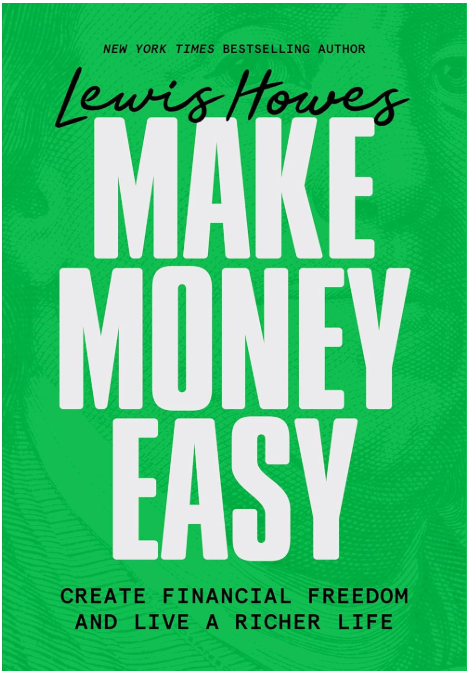
This article only scratches the surface of the mindset work Lewis Howes teaches. In his book, Make Money Easy: Create Financial Freedom and Live a Richer Life, he provides the complete step-by-step system. You'll discover how to identify your unique "Money Style," develop an unshakable money mindset, and create a clear "Money Map" to reach your financial goals. It's the perfect next step to put everything you've learned here into deeper, lasting practice.
Related Post
*The information provided on this site is for general informational and educational purposes only. All content, including articles, guides, and opinions, is not intended to be, and should not be taken as, professional advice.
*Podomline may earn a small commission if you buy through these links—at no extra cost to you. Thank you