
The 4-Step Plan to Lower Insulin and Burn Fat
The Checkup with Doctor Mike Podcast with Dr. Jason Fung | February 28, 2026
You’ve been told the same thing for decades: weight loss is simple. Eat less, move more. Calories in, calories out. If you’re not losing weight, you’re either eating too much or exercising too little.
But if it’s really that simple, why are 70% of Americans overweight or obese? Why do you eat the same way you always have—sometimes even less—and watch the scale creep up?
The uncomfortable truth is that the “calories in, calories out” model is incomplete. It treats your body like a simple furnace where you dump fuel and burn it evenly. But your body isn’t a furnace. It’s a complex, intelligent system controlled by hormones—and the most important hormone for weight loss is insulin.
Understanding how insulin works is the missing piece that explains why some people can’t lose weight no matter how little they eat, why menopausal women gain belly fat overnight, and why traditional diet advice often fails.
The Fridge with a Lock: A New Way to Think About Fat Storage
Imagine your body fat is a refrigerator. You go to the grocery store (eat food), and you store the excess in your fridge (fat cells). When you need energy between meals, you open the fridge and take food out (burn fat).
Now imagine there’s a lock on that fridge. Sometimes you can put food in, but you can’t take it out. Sometimes the lock is off, and you can access your stored energy freely.
Insulin is that lock.
| State | Insulin Level | What Happens to Fat Cells |
|---|---|---|
| Fed state (after eating) | High | Locked—fat storage mode active |
| Fasted state (between meals) | Low | Unlocked—fat burning mode active |
| Chronically high insulin | Always high | Locked permanently—can’t access fat stores |
This is why two people can eat the exact same number of calories and have completely different body composition outcomes. It’s not just about how much you eat. It’s about whether your body can access the energy you’ve already stored.
What Insulin Actually Does (And Why It Matters for Weight Loss)
Insulin is not the enemy. It’s a vital hormone with one primary job: store excess energy.
When you eat, especially carbohydrates, your blood sugar rises. Insulin is released to shuttle that glucose into your cells for immediate energy—and to store the rest for later. It stores it in two places:
- Glycogen in your liver and muscles (limited storage)
- Body fat (unlimited storage)
Here’s what most people don’t realize: high insulin levels block fat burning. As long as insulin is elevated, your fat cells remain locked. You can eat a calorie deficit, exercise until you’re exhausted, and still not lose weight because your body literally cannot access your fat stores.
| Insulin Level | Fat Burning | Fat Storage | Result |
|---|---|---|---|
| Low | Active | Inactive | Weight loss possible |
| Moderate | Reduced | Active | Weight stable |
| High | Blocked | Maximum | Weight gain inevitable |
This explains why people on insulin injections for diabetes almost always gain weight—even when they eat less. The lock is on, and no amount of calorie restriction can open it.
The Study That Changed Everything
In 2008, three major trials—the Accord trial, the ADVANCE trial, and the VADT trial—delivered shocking results that most people still don’t know about.
Researchers gave diabetic patients intensive insulin therapy to drive their blood sugars down to “normal” levels. They succeeded. A1Cs dropped from around 8% to 6.5%.
But here’s what happened next: patients didn’t live longer. They didn’t have fewer heart attacks. They didn’t have less kidney disease.
In fact, some groups actually had higher mortality with tight glucose control.
Why? Because they were treating the symptom (high blood sugar) while ignoring the cause. They gave patients more insulin, which made them gain weight, which made their diabetes worse, which required more insulin. It was a vicious cycle that improved lab numbers while destroying metabolic health.
The takeaway? Lowering blood sugar with medication is not the same as reversing the underlying disease. Weight loss and metabolic health require addressing the root cause—and the root cause is often hyperinsulinemia (chronically high insulin).
The Insulin-Weight Loss Connection: What the Research Shows
The Vermont Prison Study
In the 1960s, researcher Ethan Sims tried to get volunteers to gain weight. He recruited college students and told them to eat as much as they could. They couldn’t gain weight—their bodies fought it.
So he went to a prison (ethical standards were different then) and forced inmates to eat 8,000–10,000 calories daily while restricting exercise. Eventually, they gained 10–25% of their body weight.
Then the study ended. The inmates went back to eating normally—and their weight fell back to baseline within two months without trying.
The implication? Your body has a natural set point regulated by hormones. When you override it temporarily, it fights to return. But when those hormones become dysregulated (as with chronic hyperinsulinemia), the set point drifts upward—and stays there.
The Women’s Health Initiative
This massive study followed nearly 50,000 women for seven years. One group ate a standard diet. The other group cut 371 calories per day (a significant reduction).
After seven years, the calorie-restricted group had lost… a quarter of a pound.
Three hundred seventy-one calories per day for seven years should have produced about 30 pounds of weight loss based on simple calorie math. It didn’t. Why? Because metabolic adaptation is real. When you cut calories, your body fights back by slowing your metabolism.
The “Locked Fridge” Problem: Why Calorie Restriction Often Fails
Here’s what happens when you restrict calories without addressing insulin:
| Time | Calorie Intake | Insulin Level | Fat Access | Result |
|---|---|---|---|---|
| Week 1 | ↓ 500 calories | Still high | Locked | Initial water weight loss |
| Week 4 | ↓ 500 calories | Still high | Locked | Plateau |
| Week 8 | ↓ 500 calories | Still high | Locked | Hunger increases, metabolism slows |
| Month 6 | ↓ 500 calories | Still high | Locked | Weight regain likely |
Your body doesn’t know you’re trying to fit into a smaller dress. It only knows that food intake has dropped while insulin remains high. Its response: lower your metabolic rate to match your reduced intake.
This is why so many people hit plateaus, then regain everything (and more) when they can’t sustain the deprivation.
How to Lower Insulin and Unlock Fat Burning
The goal isn’t just to eat less. It’s to eat in a way that lowers insulin so your body can access stored fat.
Strategy 1: Reduce Insulin-Stimulating Foods
Different foods trigger different insulin responses—even at the same calorie level.
| Food (100 calories) | Insulin Response | Satiety | Fat Burning |
|---|---|---|---|
| Cookies (refined carbs) | Very high | Low | Blocked |
| White bread | High | Low | Blocked |
| Oatmeal (instant) | High | Medium | Reduced |
| Oatmeal (steel cut) | Medium | High | Improved |
| Egg | Low | High | Active |
| Chicken breast | Low | High | Active |
| Broccoli | Minimal | High | Active |
The famous David Ludwig study illustrated this perfectly. Participants ate the same calories—either instant oatmeal (high glycemic) or steel-cut oatmeal (medium glycemic). At lunch afterward, the instant oatmeal group ate 30–40% more calories because their blood sugar crashed and hunger surged.
The principle: Choose foods that minimize insulin spikes while maximizing satiety.
Strategy 2: Use Fasting to Lower Insulin Directly
Nothing lowers insulin faster or more effectively than not eating.
| Fasting Duration | Insulin Level | Fat Burning State |
|---|---|---|
| 0–4 hours | Elevated | None |
| 4–8 hours | Gradually falling | Transition |
| 8–12 hours | Significantly lower | Mild ketosis begins |
| 12–16 hours | Low | Active fat burning |
| 16–24 hours | Very low | Maximum fat burning |
| 24+ hours | Minimal | Deep ketosis |
Dr. Fung’s clinical experience is striking. One patient on 120 units of insulin daily (a massive dose) started a fasting protocol. Within one month, he was off all insulin, off his blood pressure medication, and his A1C dropped to 5.9%.
This wasn’t calorie restriction in the traditional sense. It was hormonal correction.
Strategy 3: Prioritize Protein and Fiber
Both protein and fiber reduce insulin spikes while increasing satiety.
| Nutrient | Effect on Insulin | Effect on Satiety | Additional Benefit |
|---|---|---|---|
| Protein | Moderate increase | High | Increases GLP-1 (natural appetite suppressant) |
| Fiber | Minimal | High | Feeds gut microbiome, produces SCFAs |
| Fat | Minimal | High | Slows gastric emptying |
| Refined carbs | High spike | Low | Crashes later, increases hunger |
Strategy 4: Eat in a Way That Matches Your Biology
The “grazing” model—eating 5–6 small meals daily—keeps insulin elevated all day. This is exactly the opposite of what you want for fat loss.
| Eating Pattern | Insulin Profile | Fat Burning Window |
|---|---|---|
| 6 meals/day | Constantly elevated | None |
| 3 meals/day | Spikes 3x | Limited (overnight only) |
| 2 meals/day (within 8-hour window) | Spikes 2x | Extended (16+ hours) |
| 1 meal/day | Spike 1x | Maximum (23+ hours) |
The key isn’t to starve yourself. It’s to compress your eating window so that insulin has time to drop and stay low, allowing fat burning to occur.
Why “Calories In, Calories Out” Isn’t Wrong—It’s Incomplete
Let’s be clear: calories still matter. If you eat 4,000 calories daily, you will gain weight—whether those calories come from Oreos or organic chicken.
But calories are the proximate cause, not the root cause. The real question is: Why are calories in greater than calories out?
| Possible Root Cause | What’s Really Happening |
|---|---|
| High insulin foods | Calories get stored immediately → hunger returns quickly → you eat more |
| Food addiction | Dopamine-driven eating has nothing to do with hunger |
| Chronic stress | Cortisol drives insulin resistance and belly fat storage |
| Poor sleep | Disrupts hunger hormones, increases cravings |
| Ultra-processed foods | Bypass satiety signals, engineered to be overeaten |
You can’t solve the problem by simply saying “eat less.” You have to address why you’re eating more than your body needs.
The Fasting Debate: Tool, Not Religion
Intermittent fasting has become controversial, but the physiology is straightforward:
| Claim | Reality |
|---|---|
| “Fasting just reduces calories” | Partially true—but it also lowers insulin, which matters independently |
| “Fasting causes muscle loss” | Not in controlled studies with adequate protein |
| “Fasting is just another diet” | It’s a timing strategy, not a food restriction |
| “Breakfast is the most important meal” | No evidence supports this for metabolic health |
The beauty of fasting is its simplicity. Instead of counting every calorie, you simply define when you’ll eat. Most people naturally eat less without feeling deprived.
But Dr. Fung is clear: fasting is a tool, not a religion. Some people do better with different approaches. The goal is to find what works for your body and lifestyle.
Practical Steps to Lower Insulin and Lose Weight
Step 1: Start Where You Are
Don’t jump into extreme fasting overnight. Begin by extending your overnight fast gradually.
| Week | Fasting Protocol | What to Do |
|---|---|---|
| 1 | 12 hours | Finish dinner by 7 p.m., eat breakfast at 7 a.m. |
| 2 | 13 hours | Push breakfast to 8 a.m. |
| 3 | 14 hours | Push breakfast to 9 a.m. |
| 4 | 15–16 hours | Push breakfast to 10–11 a.m. |
Step 2: Clean Up Your Food Choices
While fasting helps, what you eat during your window matters enormously.
| Eat More Of | Eat Less Of |
|---|---|
| Protein (meat, fish, eggs, tofu) | Refined carbohydrates (bread, pasta, rice) |
| Fiber (vegetables, legumes, berries) | Sugar (soda, desserts, candy) |
| Healthy fats (avocado, olive oil, nuts) | Ultra-processed foods (chips, cookies, fast food) |
| Whole foods | Liquid calories (soda, juice, sweetened coffee) |
For an even deeper dive into the practical application of these principles—including a detailed breakdown of the ketogenic diet as a therapeutic tool and the specific “healthy” foods that might be sabotaging your metabolism—explore our companion article, How to Lower Insulin and Reverse Insulin Resistance. It provides a step-by-step framework and answers the most common questions about implementing a low-carb lifestyle for lasting metabolic health.
Step 3: Pay Attention to Food Order
The sequence in which you eat affects insulin response.
| Order | Effect |
|---|---|
| Carbs first | Highest insulin spike, fastest crash |
| Protein/fat first, carbs last | Blunted insulin response, better satiety |
| With vinegar/acids | Reduced glycemic impact |
Step 4: Consider the Food Matrix
Not all carbohydrates are created equal—even with the same calorie and carb count.
| Food | Processing | Glycemic Impact |
|---|---|---|
| Steel-cut oats | Minimal | Low-medium |
| Instant oats | High | High |
| Whole apple | Whole | Low |
| Apple juice | Processed | High |
| Brown rice | Minimal | Medium |
| White rice | Processed | High |
Step 5: Address the Root Causes
Ask yourself honestly:
- Am I eating because I’m hungry—or because I’m stressed, bored, or tired?
- Am I sleeping enough? (Poor sleep raises cortisol and insulin)
- Am I moving my body in ways that reduce stress?
- Am I eating foods that satisfy me or foods engineered to keep me eating?
The Bottom Line
Weight loss isn’t just about calories. It’s about hormones—specifically insulin.
When insulin is high, your fat cells are locked. You can starve yourself and still not lose weight because your body cannot access its stored energy.
When insulin is low, the lock opens. Your body can burn fat freely, and weight loss becomes possible without constant hunger and deprivation.
The solution isn’t complicated:
- Eat foods that minimize insulin spikes (protein, fiber, healthy fats, whole foods)
- Create windows of low insulin through strategic fasting
- Address the root causes of overeating—stress, sleep, addiction, habits
This isn’t about perfection. It’s about understanding how your body actually works and working with it instead of against it.
What’s Next
You’ve now learned how insulin controls fat storage and why calorie restriction often fails. You understand that sustainable weight loss requires lowering insulin, not just cutting calories.
In the final part of this series, we’ll bring everything together with practical, evidence-based strategies from one of the world’s top nutrition researchers. You’ll learn exactly how much protein you need, how to structure your meals, and how to make this approach work in the real world—not just in theory.
Read Part 4: 5 Rules for Weight Loss That Actually Stays Off → (coming soon)
The Complete Series
This is Part 3 of a 4-part series presenting the four pillars of sustainable weight loss:
Part 1: Why your body stores fat and how to work with your hormones
Part 2: The menopause connection and how estrogen changes everything
Part 3: The truth about calories and insulin
Part 4: The practical guide to protein, plateaus, and making it work in real life (coming soon)
Bookmark this series. Share it with someone who needs it. And remember: the best diet is the one you can sustain. The best results are the ones that last.

Master Your Hunger with the Complete Guide
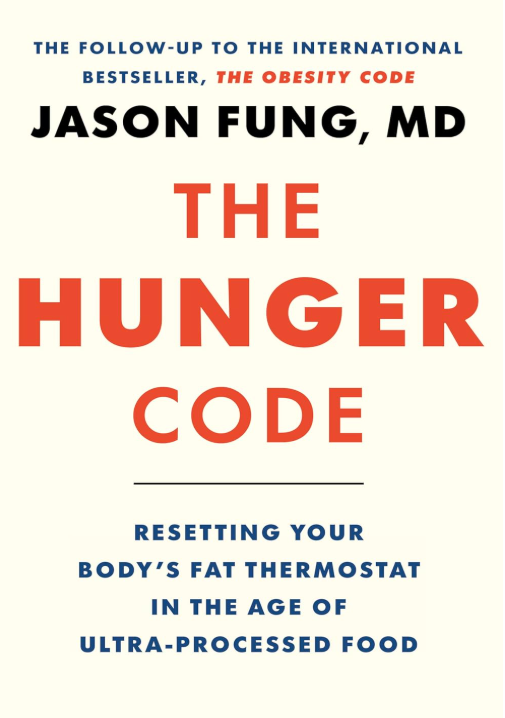
If this article opened your eyes to the role of hormones in weight loss, Dr. Fung's latest book, The Hunger Code, is the essential next step. It dives deeper into the three powerful forces that drive us to eat—physical, emotional, and social hunger—and introduces the concept of your body's "fat thermostat." Packed with 50 actionable tips, it provides a complete blueprint for resetting your appetite and achieving lasting weight control in an age of ultra-processed foods and weight-loss drugs.

Related Post
*The information provided on this site is for general informational and educational purposes only. All content, including articles, guides, and opinions, is not intended to be, and should not be taken as, professional advice.
*Podomline may earn a small commission if you buy through these links—at no extra cost to you. Thank you