Sleep Better in 7 Days Without Expensive Gadgets

The Huberman Lab Podcast with Dr. Matt Walker  |  February 16, 2016

Most sleep advice fails because it treats symptoms, not causes. You don’t need more sleep tips. You need to stop doing the things that are breaking your sleep in the first place.

How long should it take to fall asleep?

If you’re unconscious within minutes, you’re not a “good sleeper.” You’re sleep deprived. Healthy sleep onset takes 10 to 20 minutes. Anything faster means you’re carrying a debt your body is desperately trying to repay.

This is the first of many counterintuitive truths about sleep most people never hear. After analyzing decades of research and clinical protocols from sleep scientist Dr. Matthew Walker, one thing is clear: we’ve been solving the wrong problem. We chase supplements and gadgets while ignoring the fundamental behaviors that determine 80% of our sleep quality.

This guide walks through five specific mistakes keeping you awake—and what to do instead. No fluff. Just the protocols that actually moved the needle after years of 3 AM wake-ups.

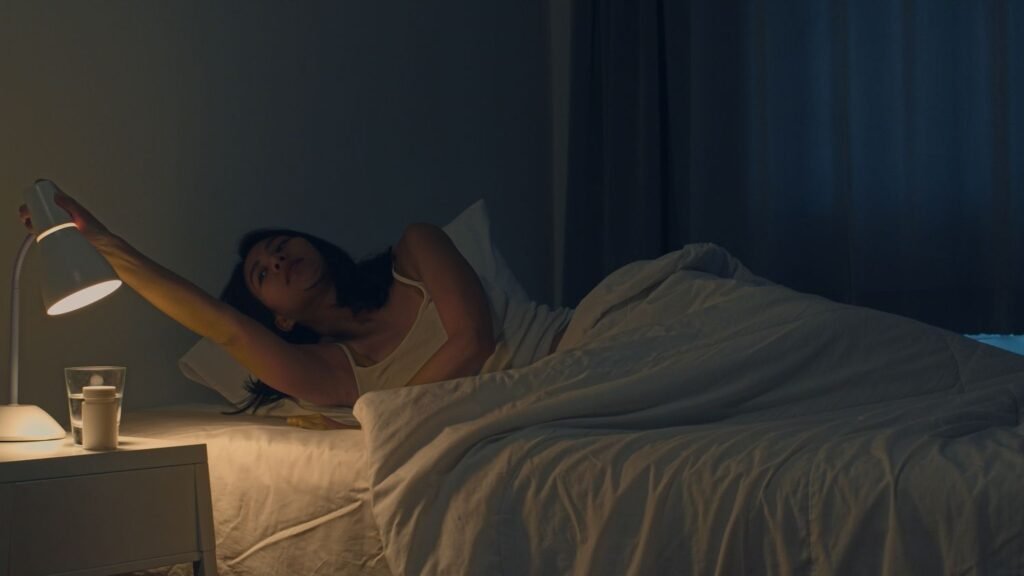
Young woman turning on her bedroom lamp after a good night sleep

What Is the Single Most Important Factor for Great Sleep?

Regularity. Going to bed and waking up at the same time—weekends included—has a larger impact on sleep quality than any other variable. Your brain anchors to this rhythm. Disrupt it by three hours on Saturday, and you’ve effectively given yourself jet lag without leaving your time zone. Your circadian clock doesn’t understand social plans. It understands consistency.

Mistake #1: You’re Trying to “Catch Up” on Sleep

This is the most common error, and it’s completely backward.

After a bad night, most people sleep in, go to bed earlier, or nap. Every single one of these backfires.

Your sleep drive is regulated by adenosine, a chemical that builds up the longer you’re awake. Think of it as a pressure cooker. When you sleep in, you release that pressure early. When you nap, you vent it prematurely. When you go to bed early, you ask your brain to sleep when it’s not ready—creating a damaging association of being awake in bed.

The protocol: Wake up at your regular time no matter how badly you slept. Hold out as close to your normal bedtime as possible. Yes, you’ll be tired. That’s the point. You’re rebuilding pressure so your next sleep is deep and continuous.

Mistake #2: You’re Using Light at the Wrong Times

We think of light as “on” or “off.” Your circadian system doesn’t.

Early in the day, your eyes are insensitive to light. You need bright, direct exposure—preferably sunlight—to signal wakefulness. This morning light increases your cortisol spike by up to 50%, which sounds alarming until you realize that morning cortisol is what gives you alertness and stable mood throughout the day.

If you cannot get sunlight: This is where a SAD lamp (5,000–10,000 lux) becomes a legitimate tool. It is not a replacement, but a backup. Used within 30 minutes of waking, it can increase that morning cortisol amplitude and help anchor your circadian rhythm. Just keep it bright and close.

Evening light operates under a completely different rule.

It takes almost nothing to disrupt your melatonin release. Dr. Walker notes that 15 seconds of bright light in the evening can suppress melatonin. Not 15 minutes. Fifteen seconds.

The protocol:

  • Morning: 10–30 minutes of outdoor light within 30 minutes of waking. No sunglasses. If that’s impossible, a SAD lamp is your next-best option.
  • Evening: Dim 50%+ of your lights 1 hour before bed. Use lamps, not overheads.
  • Bathroom trips at night: Use your phone flashlight pointed at the floor, not overhead lights.

Mistake #3: You’re in Bed Too Much

If you spend 9 hours in bed but only sleep 6, your brain learns something: bed is a place where you’re awake. Not occasionally. Consistently.

Sleep is associative. When you read, scroll, worry, or “just rest” in bed for hours, you are teaching yourself that wakefulness belongs there. You are dismantling your own sleep confidence.

The fix is counterintuitive: spend less time in bed.

Sleep restriction therapy (bedtime rescheduling) is the most effective component of CBT-I. You compress your time in bed to match your actual sleep duration—even if that’s only 5 hours initially. You build a deficit. Your brain responds by sleeping more deeply because it has no other choice.

How it works:

PhaseBedtimeWake TimeTime in Bed
Start11:30 PM5:30 AM6.0 hours
After 1 week11:15 PM5:30 AM6.25 hours
After 2 weeks11:00 PM5:30 AM6.5 hours
Goal10:30 PM5:30 AM7.0 hours

You build efficiency first. Then you expand. This is also where your mattress matters. If you’re spending 7 hours in a compressed, efficient sleep window, you need a surface that supports continuous, uninterrupted rest. A mattress that runs too hot or lacks proper support will wake you precisely when you can least afford it. This is why temperature-regulated mattresses—like the Eight Sleep system Huberman uses—are not luxury items. They are tools that remove a variable working against you. When your ambient temperature is dialed in, you stay in deep sleep longer. You don’t surface. You don’t lose efficiency.

Mistake #4: You Misunderstand Alcohol and Cannabis

Alcohol is not a sleep aid. It’s a sedative. This isn’t semantic. It’s physiological.

Sedation and sleep are not the same thing. Alcohol fragments your sleep, suppresses REM, and creates micro-awakenings you don’t remember—but your body does. You wake up feeling “unrefreshed” and can’t explain why.

Cannabis (THC) has a similar trap, but with sharper teeth.

It helps you fall asleep faster. Then tolerance builds. Then REM sleep gets suppressed. Then when you stop, REM rebound hits you with vivid dreams and insomnia during withdrawal. This is why so many people relapse. They were told it was harmless. It wasn’t.

SubstanceSleep OnsetDeep SleepREM SleepTolerance/Withdrawal
AlcoholFaster (sedation)AlteredSuppressedMild
THCFasterUnchangedSuppressedSignificant
CBD (50mg+)May improveMay improveUnchangedMinimal

CBD is the exception. At doses above 50mg, early data suggests it may reduce anxiety and help sleep without the REM suppression. But the industry is unregulated. Third-party lab testing isn’t optional.

Mistake #5: You Treat Bedtime Like a Light Switch

We expect sleep to arrive instantly. It doesn’t.

Falling asleep is like landing a plane. You don’t drop from 40,000 feet to the runway. You descend gradually. Deceleration takes time. It cannot be rushed.

Most people skip the descent entirely. They work until 10:58, scroll until 11:00, then wonder why their brain won’t shut off.

The wind-down window:
  • 60 minutes before bed: Dim lights. No new stressful input. No email. No news.
  • 30 minutes before bed: Temperature drop. Warm bath or shower. The rapid cooling afterward is the signal your body needs to initiate sleep.
  • 15 minutes before bed: Non-sleep deep rest, meditation, or the mental walk protocol.

The mental walk: Choose a route you know intimately. Close your eyes and walk it in hyperdetail. Clip the leash. Step down the porch. Check both ways at the intersection. This engages procedural memory and pulls your mind off itself—interrupting rumination not by force, but by substitution.

The Temperature Rule You’ve Never Heard

Sleep and temperature are not loosely related. They are mechanically linked.

You need to drop your core body temperature by 2–3°F to fall asleep and stay asleep. This drop happens when blood vessels in your hands, feet, and face dilate, releasing heat from your core. If you cannot vasodilate effectively, you cannot sleep.

The three-phase thermal rule:

PhaseWhat HappensTargetWhat Helps
Sleep onsetCore coolsDrop of 2–3°FWarm bath 90 min before bed
Sleep maintenanceCore stays cool~67°F ambientCool room, temperature-regulated mattress
Wake upCore warmsBaselineMorning light, movement

Why a hot bath works: It vasodilates your extremities. When you get out, you dump heat rapidly. Your core temperature drops. You fall asleep faster—studies show 25% faster sleep onset and up to 40 minutes more deep sleep.

Why your mattress matters here: If your mattress retains heat or traps it against your body, you cannot maintain that cool core temperature. You will surface from deep sleep. You will wake. This is not a niche concern. It is the difference between staying asleep and losing 45 minutes at 3:00 AM. Huberman reports sleeping “so much better” on his Helix mattress than any previous bed. Walker acknowledges companies like Eight Sleep as leaders in solving this thermal equation. The data is clear: temperature is not optional.

What Actually Works for Middle-of-the-Night Waking?

This question was asked Dr. Walker directly.

First: Remove all clock faces from the bedroom.

Knowing it’s 3:14 AM does not help you. It creates anxiety. You do math—”I have to be up in 2 hours”—and you catastrophize. You’ve trained your brain to wake and worry.

Second: Get out of bed after 20 minutes.

Not 30. Not “just a little longer.” Twenty minutes of continuous wakefulness in bed strengthens the association between bed and wakefulness.

Go to another room. Read a physical book. Listen to a podcast. Do not eat. Return only when you feel physiologically sleepy.

Third: Do nothing the next day.

No sleeping in. No extra caffeine. No compensatory naps. You hold the line. You rebuild pressure. You break the cycle.

Why Napping Backfires for Poor Sleepers

Naps are not inherently bad. But if you struggle with nighttime sleep, naps remove the fuel you need to fall asleep.

Adenosine is your sleep pressure. It accumulates from the moment you wake. A 90-minute nap clears 40–50% of that pressure. When bedtime arrives, you’re not tired enough.

The exception: If you’re a consistently good sleeper and nap briefly (under 20 minutes) before 3 PM, fine. If you’re not, napping is borrowing from tonight to pay for today.

Your Sleep Environment Is Probably Too Hot

The optimal room temperature for sleep is 67°F (18.5°C) . This is not a preference. It’s a physiological target.

This sounds cold. It is. You can wear socks. You can use a hot water bottle. But the ambient temperature must be cool enough to accept the heat you’re trying to dump.

Why socks help: Warm feet = vasodilation = faster core cooling = faster sleep onset. One study found that the warmer your feet, the faster you fell asleep.

Why your mattress matters—again: A mattress that sleeps hot works against everything your body is trying to accomplish between midnight and 6:00 AM. You cannot override physics with willpower. If your bed retains heat, you will wake.

Why You’ve Lost Confidence in Your Ability to Sleep

This is the hidden variable.

When you’ve struggled with sleep for weeks or months, you stop believing you can sleep. You approach bedtime with dread. That anticipation activates your sympathetic nervous system. You are physiologically primed for vigilance at the exact moment you need to surrender.

This is not weakness. It’s conditioning.

The path out is not positive thinking. It’s behavioral evidence. Sleep restriction works not because it tricks your brain, but because it provides irrefutable proof. When you fall asleep within 15 minutes for five nights in a row, your brain updates its belief. Confidence, in sleep, is not a luxury. It’s a mechanism.

Key Takeaways

  • Regularity beats everything. Same bedtime, same wake time—no weekend exceptions.
  • Never compensate for bad sleep. Sleeping in, napping, and early bedtimes perpetuate the cycle.
  • Morning light is non-negotiable. If you cannot get sunlight, a SAD lamp is your backup. Evening light is vulnerable to seconds.
  • Alcohol and THC are sedatives, not sleep aids. They fragment sleep and suppress REM.
  • Cool room, warm extremities, and the right surface. 67°F ambient, warm socks, and a mattress that doesn’t trap heat are the thermal trifecta.
  • Get out of bed at 20 minutes. Break the association between bed and wakefulness.
  • Mental walks outperform counting sheep. Procedural memory quiets the anxious brain.
  • Napping is borrowing from tonight. If you struggle at night, naps are debt, not credit.
  • Sleep restriction builds confidence. Less time in bed can mean better sleep within days.
  • No clock faces in the bedroom. Time awareness creates performance anxiety.

If you’re ready to take your sleep optimization even further, this guide pairs perfectly with another deep dive we highly recommend. While our focus here has been on the behavioral protocols, temperature, and light strategies that rebuild your sleep architecture from the ground up, The Ultimate Guide to Better Sleep and Fat Loss tackles the other half of the equation: the internal chemistry. It explores the critical gut-sleep connection—how your microbiome produces 400 times more melatonin than your brain—and details the specific nutrients (magnesium, omega-3s, calcium) that act as raw materials for restorative sleep. Where Dr. Walker gives you the “how” to reset your sleep timing and efficiency, that guide gives you the “what” to feed your body so it can actually build that sleep. Read them together, and you’ll have both the structural blueprint and the nutritional fuel list for a complete sleep transformation.

Sleep isn’t something you win. It’s something you create conditions for—then step aside. The protocols above are not rigid commandments. They’re levers. Pull the one that fits your current obstacle. Regularity is almost always the highest-leverage starting point. Then temperature and light. Then the harder behavioral work of getting out of bed and restricting your window.

Start here: Tomorrow morning, get 10 minutes of light—sunlight if possible, a SAD lamp if not. Tomorrow night, drop your room temperature two degrees. If you wake at 3:00 AM, get up. Read. Wait for real sleepiness. Repeat.

You don’t need to do all of it at once. But you do need to stop doing the things actively working against you.

The alarm goes off at the same time tomorrow regardless. What you do between now and then is the only variable that matters.

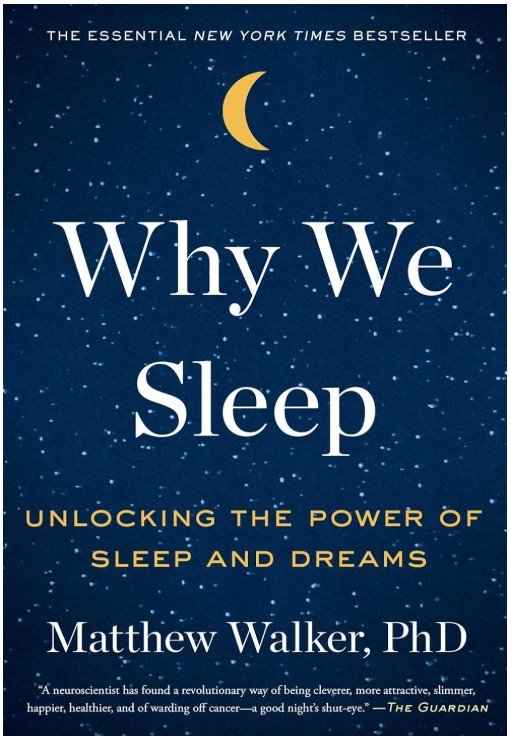
Why We sleep Book Cover

Why Read the Book That Started This Conversation?

If these protocols resonated with you, they represent just a fraction of what Dr. Matthew Walker has spent his career investigating. His book, Why We Sleep: Unlocking the Power of Dreams and Sleep, is the definitive deep dive—hundreds of pages of meticulously researched science delivered with the same clarity and conviction you heard here. Reading it is not just educational; it's the difference between following a few protocols and truly understanding why your brain and body cannot thrive without them.

Related Post

*The information provided on this site is for general informational and educational purposes only. All content, including articles, guides, and opinions, is not intended to be, and should not be taken as, professional advice.
*Podomline may earn a small commission if you buy through these links—at no extra cost to you. Thank you

Leave a Comment

Your email address will not be published. Required fields are marked *