
5 Rules for Strength That Lasts a Lifetime
The Huberman Lab Podcast with Pavel Tsatsouline | February 14, 2026
How often should you train for maximum strength?
For maximum strength without burnout, practice “greasing the groove”: perform 3-5 perfect reps with 80-85% of your one-rep max, rest for a full 10+ minutes, and repeat. Do this for 2-3 days consecutively, then take a deliberate day off. This high-frequency, low-fatigue method trains your nervous system for effortless efficiency and sustainable gains.
Most people are stuck believing that building legitimate, functional strength requires brutal, hour-long gym slogs that leave you sore and depleted for days. This common approach isn’t just inefficient; it’s neurologically counterproductive. The real secret to building resilient power that translates to daily life isn’t found in the struggle of your final, grunting rep, but in the consistent, mindful quality of your practice. It’s about training your nervous system first, and your muscles second.
Today, you’ll learn a complete, counterintuitive framework from world-renowned strength coach Pavel Tsatsouline, distilled from his conversation on the Huberman Lab podcast. This isn’t about “working out” to exhaustion; it’s about “practicing strength” as a precise skill for your nervous system. You’ll discover how to program your training for real-world power, intelligently blend strength with endurance without compromise, and recover faster—all while spending dramatically less total time under tension.
Why “Training to Failure” is Failing Your Long-Term Progress
The pervasive gym mantra of “go hard or go home” and “no pain, no gain” has a critical, performance-limiting flaw: it systematically confuses deep fatigue with meaningful progress. When you consistently train to muscular failure, you exponentially increase your necessary recovery time, inadvertently promote the conversion of powerful fast-twitch muscle fibers to slower endurance types, and, most damagingly, ingrain poor and unsafe movement patterns under fatigue. You’re practicing how to be weak and sloppy.
As Pavel explains, raw strength is first and foremost a skill of the nervous system. Your brain’s ability to efficiently and powerfully recruit motor neurons—a concept called “neural drive”—is the true foundation of usable power. Just as you wouldn’t learn to play violin by screeching the strings until your hands cramped, you shouldn’t learn strength by grinding out ugly, desperate reps until you collapse. The overlooked truth: Sustainable strength gains occur when the weight is “heavy enough to respect, but light enough not to fear.” The optimal effort channel for learning lies between boredom and outright anxiety, not in the land of total collapse.
The “Grease the Groove” Protocol: Strength as a Daily Skill Practice
This is the non-negotiable cornerstone of neurologically efficient strength building. It’s not a draining workout; it’s strategic, spaced practice woven throughout your day or week, designed to build superconductor-like pathways in your nervous system without systemic fatigue.
- The Exact Method: Select 1-3 foundational, high-carryover exercises (e.g., pull-ups, Zercher squats, bench press). Using about 80-85% of your one-rep max, perform only 3-5 deliberate, perfect reps—this is half or fewer of what you could possibly do in one all-out set. Then, rest for at least 10 full minutes before even considering the next set.
- The Supporting Science: This extended rest isn’t laziness; it allows for “initial memory consolidation” in your nervous system, solidifying the motor pattern. It’s the proven difference between cramming for a test (and forgetting everything) and spaced, deliberate repetition (which builds lasting mastery). Research confirms this method increases pure strength and can build muscle due to the high total volume of flawless work accrued over time without exhaustion.
- The Practical Schedule: Practice this rhythm for 2-3 days in a row, then take a mandatory day off. Listen to your body’s feedback above any rigid calendar. This can be seamlessly done at home with bodyweight or a single kettlebell, or easily structured within a gym environment.
Grease the Groove vs. Traditional High-Fatigue Training
| Factor | Grease the Groove (Skill Practice) | Traditional “Workout” (Fatigue Chase) |
|---|---|---|
| Effort per Set | Moderate, controlled (RPE 6-7) | Maximal, grunting (RPE 9-10) |
| Neurological Focus | Movement Skill, Neural Efficiency | Metabolic Stress, Muscle Fatigue |
| Recovery Needed | Very Low (allows for daily practice) | Very High (requires 48-72 hrs rest) |
| Primary Adaptation | Neural Drive, Movement Mastery | Muscular Hypertrophy, Metabolic Capacity |
| Soreness | Minimal to None | Frequent and Expected |
| Best Application | Building lasting, usable strength skill | Specific peaking phases for muscle growth |
leo.
The Foundational Movements Everyone Needs (Forget The Fluff)
You don’t need dizzying variety or circus tricks. Pavel advocates for a limited, powerful “menu” of high-carryover exercises that build a general, real-world reserve of strength for life’s demands—from lifting groceries to playing sports.
- For the Posterior Chain: The Narrow Sumo Deadlift. This fundamental hip-hinge pattern is non-negotiable for back health and safely lifting anything heavy off the ground. The stance is just wide enough for your arms to pass through, promoting a strong, safe position that mirrors real-world picking.
- For the Legs & Core: The Zercher Squat. Cradle a barbell in the crooks of your elbows. This often-overlooked squat variation is incredibly joint-friendly (no shoulder or wrist stress) and forces powerful, reflexive core and upper back stabilization. A long-term goal of a double bodyweight Zercher squat signifies formidable, functional strength.
- For the Upper Body Push: The Bench Press. Despite its “bro culture” reputation, the bench press, when balanced with pulling, allows for steady, measurable strength gains with remarkably low weekly volume. Pair it with pull-ups for a balanced upper body framework.
Common Programming Mistake: Chasing random variety over dedicated mastery. Soviet weightlifting research found zero correlation between the sheer number of exercises and competition results. Find a few tools you can use pain-free and practice them with intent for years, not weeks.
The Overlooked Power of Grip Training (And the Tools That Work)
While big lifts build foundational strength, one quality has a profound impact on everything you do and is uniquely linked to longevity: grip strength. As a neuroscientist would note, the motor neurons controlling your fingers and hands are among the first to degrade with age. Training them has a disproportionate effect on overall nervous system health and performance.
- The Carryover Effect: A stronger grip instantly increases your strength in other lifts via a phenomenon called “irradiation.” Crushing the bar during a curl or deadlift recruits more muscle and stability throughout your entire body.
- Direct Grip Training: For dedicated grip development, Pavel points to specific tools with a proven reputation, such as the Captains of Crush grippers. He notes that training with such high-caliber grippers is a full-body, neurological effort—requiring you to brace your core, engage your lats, and crush with total body tension to close the handles. It’s far from an isolated movement.
- Practical Integration: You don’t necessarily need special equipment to start. Simply climbing a thick rope or doing towel pull-ups will brutally and effectively train your crushing grip. The key is to train it consistently, either as part of your main lifts or with a few dedicated sets per week.
How to Combine Strength & Endurance (Without Compromising Either)
Can you legitimately get strong while also building cardiovascular stamina? Absolutely, but not by mindlessly mixing both poorly in the same exhausting session. The key is understanding “the biological cost of adaptation” and strategically managing glycolytic (acid-producing) stress to avoid mutual interference.
- The Anti-Glycolytic Secret for Athletes: For combat, field sport, or tactical athletes, traditional “smoker” circuits that induce vomiting are counterproductive. Instead, use Repeat Strength Endurance:
- Choose 3 compound exercises at ~70% of your 1-rep max.
- Perform only 3 crisp reps of each, in a circuit.
- Rest 60 seconds precisely. Repeat for 10-15 rounds.
- This builds the specific repeat-power endurance needed for repeated bursts (like wrestling or sprinting) without the acidic burn that destroys recovery and hampers strength.
- For Pure Cardio & Heart Health: Steady-state work (where you can hold a conversation) is king for safely building heart stroke volume and mitochondrial density. Save high-intensity interval work for short, competition-specific peaking phases; overuse leads to burnout and potential cardiac strain.
Smart Weekly Blending of Strength & Cardio
| Training Priority | Strength Sessions | Endurance/Cardio Sessions | Governing Principle |
|---|---|---|---|
| Strength is Primary | 3-4 days (Grease the Groove or heavy lifts) | 1-2 days (steady-state, conversational pace) | Separate sessions by 6+ hours if done same day. Guard strength quality. |
| Endurance is Primary | 1-2 days (maintenance: e.g., 3×3 @80%) | 3-4 days (mix of steady-state & intervals) | Do strength first when fresh if combined in a day. Protect technique. |
| General Health & Longevity | 2 days (e.g., focused sessions Mon/Thu) | 2 days (e.g., easy cardio Tue/Fri) | Use “fill an hour” as a maximum session length to manage systemic stress. |
The Counter-intuitive Rules of Recovery & Masterful Tension
Your work between sets is as critical for strength as the lifts themselves. Recovery is not passive; it’s an active skill that amplifies progress.
- Never Train “On the Nerve.” Always finish each session feeling stronger and more capable than when you started. This preserves your adrenal capacity and neural drive for your career, family, and life outside the gym walls.
- Master the “Fast and Loose” Drill. After a heavy set, never slump or check your phone. Actively shake out your limbs, let your muscles go completely passive like a ragdoll, and practice rapid relaxation. This direct skill improves movement speed, enhances recovery, and teaches nervous system control.
- Breathe to Increase Strength, Literally. The “pneumatic reflex” means intra-abdominal pressure (IAP) acts as a volume knob for your nervous system. To brace correctly: inhale against pursed lips into your abdomen, pull up your pelvic floor, then create pressure by “hissing” against a closed throat. This stabilizes your spine and heightens motor neuron sensitivity for more power.
Pervasive Myth Buster: “You need to feel sore (DOMS) to have grown.” Soreness often stems from excessive eccentric stress and metabolic acidosis, which can increase muscle damage and free radical production. True progress is measured by increased performance with less perceived effort, not by post-workout pain.
Key Takeaways: Your Strength Practice Blueprint
- Strength is a neurological skill, not a test of pain tolerance. Practice it frequently with impeccable quality, not infrequently with maximal fatigue.
- Grease the Groove is your foundation. Do 3-5 perfect reps, rest 10+ minutes, and repeat. Do this for 2-3 days, then rest. Strength will accumulate surprisingly fast.
- Don’t neglect your grip. Training tools like heavy-duty grippers or rope climbs build strength with a direct carryover to longevity and all other lifts.
- Minimize training to absolute failure. It wrecks recovery, ruins technique, and teaches your nervous system to accept failure as an option.
- Separate your primary stressors. Intelligently blend strength and endurance by focusing on one quality per session or using structured anti-glycolytic protocols.
- Tension and relaxation are dual skills. Learn to create full-body, breath-supported tension for lifts, and rapid, complete relaxation for recovery between efforts.
- You cannot peak at everything at once. Use 3-4 week blocks to shift priorities between strength, hypertrophy, and endurance, maintaining other qualities with minimal work.
Want to Take Your Transformation Further?
Mastering the skill of strength is a game-changer, but it’s just one piece of the total fitness puzzle. For a complete, science-backed approach to reshaping your body, explore our related guides:
- Build a Powerful Foundation: Before you focus on heavy weights, ensure your body is primed for growth and resilience. Our Science-Backed Guide to Strength and Muscle Growth dives deep into the physiology of hypertrophy, optimal training splits, and nutrition to help you build a strong, resilient physique effectively.
- Master the Daily Habits: Lasting change happens in the small, consistent actions you take every day. Discover how to leverage just 5 minutes with our guide, 5 Minutes a Day to Transform Your Body: Science & Habits. Learn the micro-habits with the biggest impact on metabolism, recovery, and overall health, making your fitness journey sustainable and integrated into your life.
Building authentic, resilient strength isn’t about surviving a workout; it’s about cultivating a mindful, daily practice that enhances every physical aspect of your life. By shifting your focus from accumulated fatigue to movement precision, from weekly marathons to consistent skill practice, you unlock a sustainable, intelligent path to becoming a more capable and powerful human. Start today by choosing just one exercise and “greasing the groove” with perfect form—the profound results will speak for themselves, without the screaming.

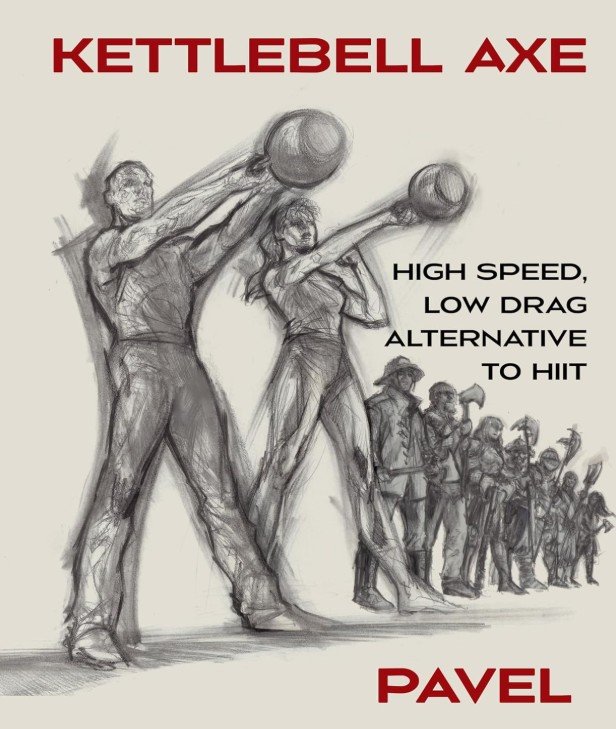
Kettlebell Axe
If you found the principles of "grease the groove" and anti-glycolytic training compelling, delve deeper into their practical application with Pavel Tsatsouline’s focused work, The Kettlebell Axe. This book expands on the high-speed, low-fatigue training philosophy, offering a complete, science-backed system for building explosive power and unparalleled work capacity using the unique tool of the kettlebell. It's the logical next step for transforming theory into actionable, results-driven practice.

Related Post
*The information provided on this site is for general informational and educational purposes only. All content, including articles, guides, and opinions, is not intended to be, and should not be taken as, professional advice.
*Podomline may earn a small commission if you buy through these links—at no extra cost to you. Thank you