The Optimal Strength & Hypertrophy Protocol: A 3x5 Framework for Maximum Gains (Backed by Science)

The Huberman Lab Podcast with Dr. Andy Galpin  |  January 28, 2026

You’re lifting weights but your strength has plateaued, or you’re worried about losing muscle and independence as you age. Most advice is either overly complex bro-science or generic “lift heavy” platitudes that ignore your nervous system’s critical role. In this guide, drawn from Dr. Andy Galpin’s expertise on the Huberman Lab podcast, you’ll learn the exact, science-backed “3–5 Rule” for building real-world strength, how strength training preserves your nervous system, and the simple weekly plan that works whether you’re 20 or 70.

What is the most effective method to build strength?

The most efficient method to build pure strength is the “3–5 Rule”: Perform 3–5 exercises per session, for 3–5 sets of 3–5 repetitions, resting 3–5 minutes between sets, for 3–5 sessions per week. The key is lifting at ≥70% of your one-rep max with maximal intent on each repetition, focusing on compound movements that train your body as a coordinated system rather than isolating single muscles.

man working out with a barbell in the gym

Why Strength Isn’t Just Bigger Muscles: The Neuromuscular Link

Most people conflate strength with hypertrophy (muscle size). According to Dr. Andy Galpin, a professor of kinesiology and world-renowned muscle physiology expert, this is a fundamental mistake with real consequences for how we train. Strength is your neuromuscular system’s ability to produce force. While bigger muscles can help, the primary drivers of strength gains are neural and mechanical, not just structural. This includes improved nerve signaling efficiency, better motor unit recruitment and synchronization, and enhanced muscle fiber contractility—all without the fiber necessarily growing larger. This critical distinction is why a powerlifter is often stronger than a larger bodybuilder in a maximal lift. Training for strength, therefore, is about training your nervous system just as much as your muscles. This has profound implications for longevity, as the loss of strength and, especially, muscle power with age is a primary predictor of loss of independence and increased fall risk.

The Non-Negotiable Concepts of Any Effective Training Program

Before diving into the specific protocol, you must understand the four foundational pillars of any successful program. These concepts, emphasized by Dr. Galpin, are what separate a productive plan from random workouts, especially for building strength:

  1. Adherence: Consistency beats perfection every time. The most perfectly designed program is useless if you can’t stick with it. Finding a rhythm you enjoy and can maintain is the #1 predictor of long-term success.
  2. Progressive Overload: Your body adapts to stress. To keep improving, you must systematically increase the demand. For pure strength, this most often means a 3–5% increase in load per week, though increasing volume (sets x reps) or improving technique with the same load also counts.
  3. Individualization: The best program is the one that fits your life. Adapt the plan to your available equipment, weekly schedule, movement restrictions, and unique recovery capacity. A program must be practical to be sustainable.
  4. Specificity: To get stronger, you must practice the skill of moving heavy loads with high intent. This means prioritizing exercises and set/rep schemes that directly challenge your maximal force production capacity.

The 3–5 Rule Decoded: Your Simple, Powerful Strength Blueprint

This elegant framework, repeatedly emphasized by Dr. Galpin, simplifies complex programming science into an easy-to-remember and highly effective system. The “3–5 Rule” ensures you hit the key variables for strength without over-complicating your workouts.

VariableStrength ProtocolKey Insight & Practical Application
Exercises3–5 per sessionFocus on compound, multi-joint movements (e.g., squat, deadlift, press, row). Choose movements, not just muscles—think “explosive hip hinge” or “vertical press.”
Sets3–5 per exerciseThis provides enough total volume to drive adaptation but isn’t so high that it causes excessive systemic fatigue, which can interfere with neural recovery.
Reps3–5 per setThis low rep range prioritizes high load (≥70% of your 1-Rep Max) and maximal neural drive. It allows you to practice moving heavy weight with quality.
Rest3–5 minutes between setsThis is crucial for full phosphagen system replenishment and neural recovery. It ensures each set is performed with high intent and minimal fatigue carryover.
Frequency3–5 days per weekThis frequency allows for sufficient practice and stimulus while providing the nervous system and muscles adequate time to recover and supercompensate.

How to Execute It With Precision:

  • Intent is Everything: On the concentric (lifting) phase of each rep, consciously try to move the weight as fast as you can. Even if the bar moves slowly due to the heavy load, this mental focus maximizes high-threshold motor unit recruitment.
  • Master Your Cadence: Use a controlled eccentric (lowering), a brief pause to eliminate momentum, then an explosive concentric. A 3-1-1 tempo (3 seconds down, 1-second pause, 1 second up explosively) is an excellent model to ensure control and intent.
  • Progression in Practice: When you successfully complete all sets and reps across your sessions for a week, add a small increment (~5 lbs or 2-3%) to the bar the following week. If you fail, repeat the weight until you master it.

Strength vs. Hypertrophy: How to Program for Your Specific Goal

Your primary goal dictates your execution. Use this comparison table to intelligently differentiate your training focus and understand why the “how” matters more than the “what.”

Training GoalPrimary Physiological DriverOptimal Rep RangeIdeal Load (% of 1RM)Rest Between SetsMental Cue & Intent
Maximal StrengthNeural Adaptations & High Mechanical Tension1-585-100%+3-5 mins“Move it Fast!” – Maximal Force/Speed Intent
Hypertrophy (Size)Metabolic Stress, Muscle Damage & Total Volume6-30 (8-15 is sweet spot)65-85%30 sec – 2 mins“Feel the Squeeze!” – Mind-Muscle Connection, Seek Fatigue
PowerVelocity of Force Production1-530-70%3-5 mins“Explode!” – Maximal Velocity is Non-Negotiable

Critical Takeaway: If your goal is to get significantly stronger without necessarily adding bulk, live in the 1-5 rep range with very heavy loads and long rests. If you want a balanced mix of size and strength, the 5-8 rep range is highly effective. Remember, exercises don’t determine adaptations; how you execute them does.

The Overlooked Longevity Key: Strength Training for Lifelong Neuromuscular Health

One of the most powerful insights from Dr. Galpin’s discussion is that resistance training is the single best, and only, exercise tool to directly combat neuromuscular aging. The data is striking: after age 40, you lose about 1% of muscle size per year, but a more alarming 2-4% of strength per year, and a staggering 8-10% of muscle power per year. This decline in power—critical for catching a fall or rising quickly from a chair—is not an inevitable genetic fate; it’s primarily due to disuse and de-training. Remarkable research shows that even adults in their 90s can see dramatic improvements (30-170%!) in strength and muscle size with a proper, brief training intervention. Therefore, functional independence in later life is a direct function of preserved strength and power, not just muscle mass.

Your Actionable Weekly Strength Training Template

Here is a simple, balanced 3-day template that applies the 3-5 Rule, ensures movement variety, and builds full-body strength. Perform this routine 3 times per week, with at least one rest day between sessions.

Day 1 (Lower Body/Press Focus)

  • Barbell Back Squat: 4 sets x 5 reps (Focus on depth and powerful ascent)
  • Romanian Deadlift: 3 sets x 5 reps (Control the stretch on the hamstrings)
  • Standing Overhead Press: 3 sets x 5 reps (Brace core, press bar overhead in a straight line)
  • Plank: 3 sets, 30-60 sec hold (Focus on full-body tension)

Day 2 (Upper Body/Hinge Focus)

  • Bench Press: 4 sets x 5 reps (Retract shoulder blades, control bar to chest)
  • Bent-Over Barbell Row: 3 sets x 5 reps (Pull bar to lower chest, squeeze shoulder blades)
  • Rear Foot Elevated Split Squat: 3 sets x 5 reps per leg (Keep torso upright, lower back knee)
  • Pull-Up (or Lat Pulldown): 3 sets to near-failure (Initiate pull with back muscles)

Day 3 (Full Body/Integrative Focus)

  • Deadlift: 3 sets x 3 reps (Drive through heels, lock hips and knees at top)
  • Incline Dumbbell Press: 3 sets x 5 reps (Better shoulder-friendly chest stimulus)
  • Seated Cable Row: 3 sets x 5 reps (Squeeze at peak contraction)
  • Farmer’s Carry: 3 sets x 40-yard walk (Grip strength and core stability)

*Always follow the 3-5 minute rest rule for primary lifts. Warm up thoroughly with 5-10 minutes of dynamic movement (leg swings, arm circles, cat-cow) and 2-3 progressively heavier warm-up sets of your first exercise.*

Advanced Techniques to Shatter Strength Plateaus

Once you’ve mastered the basics and progress slows, integrate these advanced methods discussed by Dr. Galpin to provide a novel stimulus and break through barriers:

  • Cluster Sets: Instead of 5 continuous reps, perform them as 5 singles with 10-20 seconds of rest between each. This maintains peak power and force output for every single repetition, effectively giving you five “first reps.”
  • Eccentric Overload: Use 105-120% of your 1RM for the eccentric (lowering) phase only, with spotters assisting the concentric lift. This safely trains your muscles and connective tissues at supra-maximal loads, a potent stimulus for strength.
  • Dynamic Variable Resistance: Add bands or chains to a barbell. As you lift and the bands stretch (or chains lift off the ground), the load increases. This overloads the mechanically stronger parts of the lift (like the lockout), helping you build strength through the entire range of motion.

Practical, Pro-Level Cues for Immediate Improvement

  • Breathe & Brace: Use the Valsalva maneuver for heavy sets. Take a big breath into your belly (not your chest), brace your core as if preparing for a punch, hold it during the rep to create spinal stability, and exhale forcefully at the top.
  • Ditch the Phone: Distraction between sets reduces focus, elongates rest times inconsistently, and diminishes the mindful intent required for strength training. Be present with your recovery.
  • Warm-Up Specifically, Not Generically: Do 5-10 minutes of general dynamic movement to raise body temperature, then perform 2-4 specific warm-up sets of your first exercise. Start with the bar, then add weight in jumps, focusing on perfect technique, until you reach your working weight.

Key Takeaways

  • Strength is a skill of the nervous system. Train it with heavy loads (≥70% 1RM), low reps (3-5), maximal intent to move fast, and full recovery between sets to prioritize neural adaptations.
  • Use the 3–5 Rule for foolproof programming: Structure your workouts with 3-5 exercises, 3-5 sets, 3-5 reps, 3-5 minutes of rest, 3-5 days per week. This framework optimizes strength without overcomplication.
  • Preserve strength to preserve independence. It’s the #1 tool to fight catastrophic neuromuscular aging. The loss of strength and power, not just muscle, dictates functional ability as you age.
  • You can get stronger without getting bigger by prioritizing the 1-5 rep range, very heavy weight, and plenty of rest. This minimizes metabolic fatigue and hypertrophy while maximizing neural drive.
  • Progressive overload is non-negotiable. Aim to add small, consistent increments of weight (3-5%) weekly. If you can’t add weight, add a rep or a set with perfect form before increasing load.
  • Compound movements are king for strength. Squat, hinge, push, pull, and carry. These patterns train your body as an integrated unit, translating better to real-world force production.
  • Recovery between sets is neural, not muscular. Taking 3-5 minutes allows your nervous system and phosphagen energy system to reset fully, ensuring each set is high-quality and effective.

For a fantastic complementary read that dives deeper into minimalist programming, the science of failure, and efficient workout structures, I highly recommend checking out the detailed summary of the Peter Attia and Mike Israetel discussion: The Ultimate Short Guide To Resistance Training.

By applying these principles from Dr. Andy Galpin and Dr. Mike Israetel, you can move beyond generic routines and start training with purpose, clarity, and results.


Deepen Your Performance Toolkit

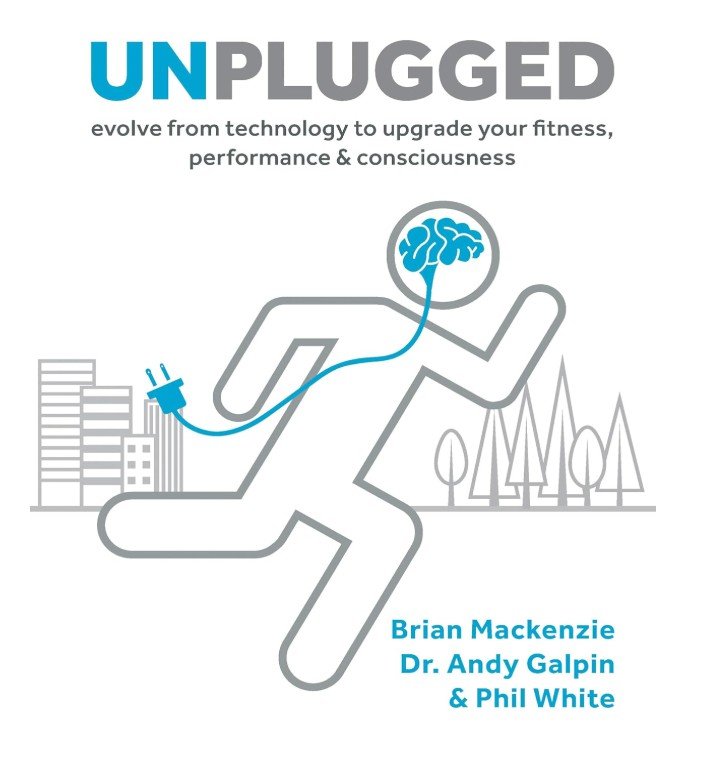
Unlock Dr. Andy Galpin's complete science-backed system for optimizing your body and mind. Continue your journey by reading his acclaimed book, Unplugged, to master the art of upgrading your physical performance and mental focus.

*Podomline may earn a small commission if you buy through these links—at no extra cost to you. Thank you

Related Post

Leave a Comment

Your email address will not be published. Required fields are marked *