Why Trump Sides With Putin: Power, Ego, and the New Global Order

The Atlantic with Fiona Hill  |  January 24, 2026

Why does Donald Trump repeatedly side with Vladimir Putin—even when doing so appears to undermine U.S. interests, weaken democratic allies, and contradict decades of American foreign policy?

This question has persisted since Trump’s first presidential campaign, intensified during his first term, and has become even more urgent amid renewed global instability. Trump’s rhetoric, policy preferences, and personal posture toward Russia stand apart from nearly every modern U.S. president, Republican or Democrat.

This post, featuring David Frum and Fiona Hill—a former senior U.S. intelligence official and one of the world’s foremost experts on Russia, delivers a comprehensive, structured explanation of why Trump aligns himself with Putin and what that alignment reveals about modern geopolitics.

This is not a partisan argument. It is an analysis of worldview, incentives, psychology, and power.

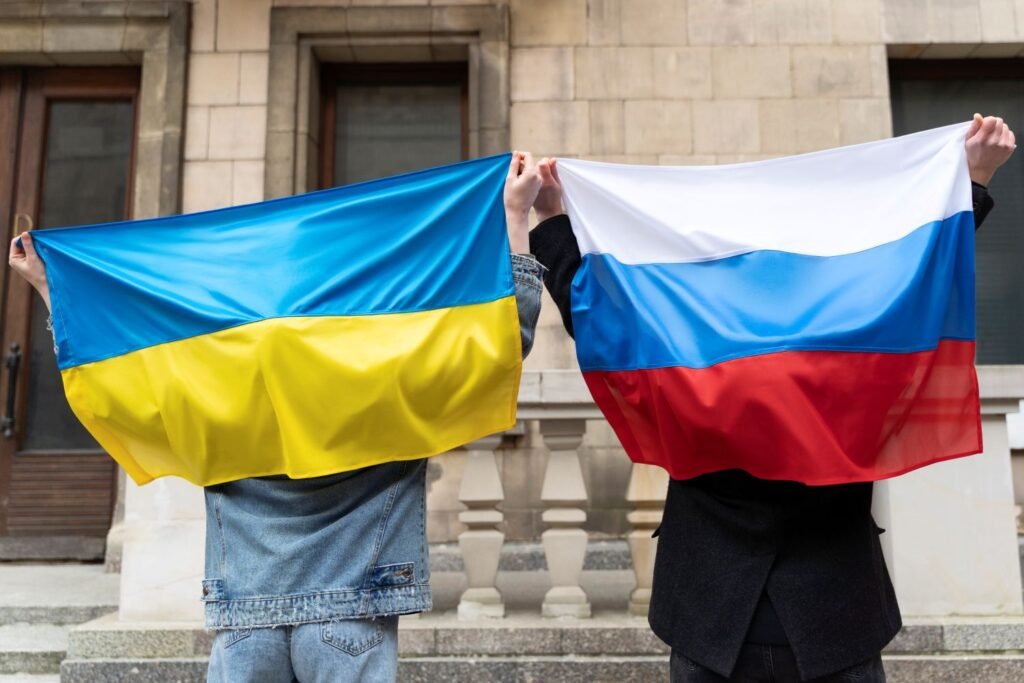
Two people on the street . One holding Ukranian Flag and one Holding Russian flag

The Central Insight: Trump and Putin Share the Same Theory of Power

The strongest explanation for Trump’s affinity toward Putin is not secret kompromat, hidden financial ties, or ideological sympathy.

It is something simpler and more consequential:

Trump and Putin believe in the same model of how the world works.

Both men reject the idea that international order is built on laws, norms, institutions, or shared values. Instead, they see global politics as a contest dominated by individuals—specifically strong men—who impose outcomes through leverage, intimidation, and personal authority.

What This Shared Model Looks Like

According to Fiona Hill, this worldview rests on several core assumptions:

  • Power flows from the individual leader, not from institutions or citizens
  • Checks and balances weaken authority rather than strengthen legitimacy
  • International agreements matter only if enforceable by force
  • Smaller nations do not have real agency and exist within the spheres of influence of larger powers
  • Morality is secondary to dominance, and ideals are often viewed as cover stories for weakness

Key takeaway: Trump does not think in terms of nations or systems—he thinks in terms of dominant personalities.

Trump’s Admiration for Unchecked Authority

Trump has consistently expressed admiration for leaders who operate without internal resistance. This admiration is not subtle, accidental, or rhetorical—it is a recurring pattern.

He openly praises leaders who:

  • Control courts, media, and political opposition
  • Face no meaningful legislative or judicial constraints
  • Rule indefinitely without electoral accountability
  • Personalize the state around themselves

Vladimir Putin represents the most fully realized version of this model.

Why Putin Appeals to Trump

Putin has:

  • Eliminated meaningful political opposition
  • Centralized power into a rigid vertical hierarchy
  • Neutralized courts, legislatures, and regional autonomy
  • Positioned himself as the embodiment of the Russian state

Important takeaway: Trump envies the freedom Putin has from accountability.

From Trump’s perspective, Putin is able to act decisively, ruthlessly, and without consequence—qualities Trump repeatedly frames as strength.

Ukraine: The Country That Breaks Trump’s Worldview

Ukraine is not just a geopolitical issue for Trump. It is a symbolic and psychological threat.

President Volodymyr Zelensky embodies everything Trump’s worldview rejects:

  • A leader empowered by democratic legitimacy
  • A president elevated by popular resistance, not brute force
  • A wartime leader praised globally for courage and moral clarity
  • A figure compared to Winston Churchill

Why This Provokes Trump

Zelensky’s success challenges Trump’s belief that power flows only from dominance and intimidation.

  • Ukraine demonstrates that:
  • Smaller nations can resist larger powers
  • Institutions and alliances can matter
  • Legitimacy can rival brute force

Key takeaway: Ukraine disproves Trump’s theory of power—and that makes it intolerable.

The Lasting Impact of the 2019 Impeachment

Trump’s first impeachment was a defining event in his presidency and deeply shapes his posture toward Ukraine.

From Trump’s perspective:

  • Ukraine became the trigger for his humiliation
  • Zelensky refused to provide political favors
  • U.S. institutions punished him for acting like a strongman

The Lesson Trump Took Away

Rather than concluding that his behavior was improper, Trump internalized a different lesson:

  • The American system constrains power
  • Acting like Putin inside the U.S. has consequences
  • Ukraine represents defiance, not partnership

Important takeaway: Trump redirected resentment away from institutions and toward Ukraine itself.

Putin’s True Strength: Psychological Precision

Fiona Hill emphasizes that Putin’s greatest advantage is not military power, economic dominance, or ideology.

It is psychological mastery.

Putin excels at:

  • Identifying personal insecurities
  • Exploiting ego and vanity
  • Offering validation at critical moments
  • Practicing long-term strategic patience

How This Works With Trump

Putin does not need leverage or blackmail. Trump’s vulnerabilities are public.

Instead, Putin:

  • Praises Trump publicly
  • Treats him as an equal strongman
  • Signals respect and validation
  • Mirrors Trump’s self-image back to him

Key takeaway: Putin does not control Trump—he reinforces Trump’s self-perception.

The Influence Cycle Between Putin and Trump

Putin’s BehaviorPsychological Effect on TrumpStrategic Outcome
Public praise and flatteryFeels respected and validatedIncreased trust and openness
Strongman framingPersonal identification with PutinSympathy toward Russian positions
Patience and restraintTrump fills silence, overreachesNegotiating advantage for Putin
Selective cooperationPerceived goodwill and reasonablenessReduced skepticism and pushback

Bold takeaway: This is emotional leverage, not coercion.

Trump’s Misreading of Russia’s Real Power

Trump consistently overestimates Russia’s global strength because he uses outdated metrics.

He equates power with:

  • Geographic size
  • Military imagery and symbolism
  • Nuclear weapons
  • Personal dominance by a leader

What Trump Misses

According to Hill:

  • Russia’s economy is stagnant and brittle
  • Human capital is being destroyed by war
  • Innovation outside the military sector is collapsing
  • Dependence on China is accelerating

Key takeaway: Trump sees size and assumes strength, ignoring economic and institutional decay.

Putin’s Strategic Bet: Endurance Over Victory

Putin understands that the invasion of Ukraine was a catastrophic miscalculation. However, his strategy has shifted from winning decisively to lasting longer than everyone else.

His core assumptions:

  • Western democracies lose focus
  • Elections disrupt long-term strategy
  • Public fatigue weakens resolve
  • Trump will pressure Ukraine to concede

Important takeaway: Putin is not trying to win quickly—he is trying to outlast his opponents.

Trump’s worldview and political incentives reinforce this calculation.

Trump’s Transactional Vision of the World

Trump views foreign policy through the lens of real estate and deal-making rather than governance.

In this framework:

  • Large powers divide territory into spheres of influence
  • Smaller nations become bargaining chips
  • Alliances are liabilities unless immediately profitable
  • Peace comes from deals between dominant leaders

Implications for Ukraine and NATO

Under this model:

  • Ukraine has no inherent sovereignty
  • NATO is a cost, not a force multiplier
  • Democratic values are negotiable

Key takeaway: Trump believes stability comes from strongmen agreements, not democratic institutions.

Two Competing Worldviews

Democratic OrderStrongman Order
Rule of lawRule by individual
Institutional legitimacyPersonal authority
Multilateral alliancesBilateral deals
Accountability and checksLoyalty and obedience
Consent of the governedControl through force
Shared norms and valuesPower without constraint

Bold takeaway: Trump and Putin operate on the same side of this divide.

The Role of Trump’s Inner Circle

Trump’s advisors often reinforce his instincts rather than challenge them.

Many come from:

  • Real estate
  • Transactional business cultures
  • Hierarchical negotiation environments

Their approach prioritizes:

  • Dealing directly with “the guy in charge”
  • Speed over process
  • Personal relationships over institutions

Key takeaway: Trump’s inner circle amplifies his alignment with Putin’s worldview.

Vanity, Validation, and the Simplest Explanation

The most uncomfortable conclusion from the transcript is also the most direct:

Trump sides with Putin because Putin makes him feel important.

This dynamic:

  • Does not require conspiracy
  • Does not depend on coercion
  • Does not rely on secret agreements

It relies on ego reinforcement.

Putin understands this instinctively and exploits it efficiently.

Long-Term Consequences for the United States

This alignment has serious and lasting effects:

  • Weakening NATO cohesion
  • Normalizing authoritarian governance
  • Undermining democratic credibility
  • Encouraging territorial aggression
  • Eroding trust in institutions

Important takeaway: When a U.S. president adopts a strongman worldview, global norms erode rapidly.

Does This End After Trump?

A critical question remains: Is this dynamic unique to Trump, or does it represent a broader shift?

According to Hill:

  • Technology amplifies ideological alignment
  • Parallel thinking creates “fellow travelers”
  • Trump accelerates trends that already existed

Key takeaway: Trump is a catalyst, not the sole cause.

Conclusion: This Is Not a Mystery—It’s a Worldview Clash

Trump does not side with Putin because he is naïve, manipulated, or secretly compromised.

He sides with Putin because they see the world through the same lens.

Both believe:

  • Power belongs to the strong
  • Institutions are obstacles
  • Morality is secondary to dominance

Understanding this alignment is essential—not just for interpreting Trump’s behavior, but for recognizing the stakes of modern geopolitics.

Final takeaway: **This is not about personalities alone. It is a battle between democratic order and strongman rule—and the outcome will shape the global politics.

Related Post

Leave a Comment

Your email address will not be published. Required fields are marked *