7 Mental Models to Beat FOMO and Build Real Wealth

You want to build lasting wealth, but everywhere you turn, you’re bombarded with conflicting advice: buy real estate, trade crypto, pick stocks, max out your 401(k). It’s overwhelming. The problem isn’t a lack of information—it’s that most advice ignores the core psychological battle you face daily against envy and impatience, which are amplified by social media. Your biggest enemy isn’t the market; it’s your own brain’s wiring in a world designed to trigger fear of missing out (FOMO). This constant noise leads smart people to abandon sensible, long-term plans for emotionally charged, short-term gambles, undermining their financial future before it even begins.

Here, you’ll learn the one non-negotiable mental skill that separates those who accumulate lasting wealth from those who chase fleeting riches. This isn’t about finding the next hot stock; it’s about building an unshakable financial identity and a system that works automatically, as revealed by behavioral finance expert Morgan Housel. You’ll discover why conventional “get-rich-quick” wisdom fails, how to accurately define risk and luck for your life, and implement a simple, sustainable framework for genuine financial freedom that prioritizes peace of mind over constant optimization.

What is the single most important financial skill?

The single most important financial skill is cultivating a complete immunity to FOMO (Fear Of Missing Out). This psychological discipline is the bedrock upon which all other wealth-building strategies depend. If you are susceptible to envying others’ gains and chasing trending investments, you will consistently sabotage your own carefully laid, long-term plans. Lasting wealth is not built through reactive genius but through proactive patience and a steadfast commitment to a personal strategy, even—and especially—when it feels boring compared to the stories of rapid gains flooding your newsfeed.

Rich man sitting in the back of his luxury car

Why Everything You Think About Wealth Is Probably Wrong

Most financial debates are not productive exchanges of ideas. They are people with fundamentally different personalities, risk tolerances, and life goals talking past each other. There is no universal “right” answer for investing, saving, or spending. The first, and most liberating, step is understanding that personal finance is more personal than it is finance. Your financial plan must be a custom-fit reflection of your unique psychology, career volatility, family obligations, and aspirations for independence. A strategy that brings your friend peace might fill you with anxiety, and vice versa. Success comes from introspection, not imitation.

The primary search intent for someone seeking wealth-building advice is problem-solving. They want a clear, actionable path that accounts for real-world psychological hurdles and provides durable principles, not fleeting stock tips. This guide covers the core behavioral principles, including: building a wealth mindset, eliminating FOMO, harnessing index funds, achieving financial independence, distinguishing risk from luck, leveraging compounding through patience, and strategically managing lifestyle inflation without depriving yourself of a joyful present.

The Critical Difference Between Being Rich and Being Wealthy

People often use these terms interchangeably, but the distinction is the cornerstone of true financial success. Understanding it changes how you save, spend, and measure progress:

  • Being Rich is about having a high income and a high expense lifestyle. It’s making enough to cover a large mortgage, luxury car payments, and lavish credit card bills every month. It’s highly visible—displayed in cars, houses, and designer clothes. It is a flow of money that comes in and goes out.
  • Being Wealthy is about possessing financial independence and autonomy. It’s the money you don’t spend—the savings and investments that have been compounded over time to give you the ultimate freedom: the choice of how to spend your time, regardless of a paycheck. Wealth is hidden in brokerage accounts and balance sheets, while riches are on public display for social validation.

The counterintuitive truth: Real wealth is manifested in the opportunities you decline, the expensive cars you don’t buy, and the oversized homes you bypass. It’s the growing gap between your ego’s desires and your actual income, a gap that silently funds your future autonomy and security.

The #1 Wealth Killer: FOMO (And How to Kill It)

Not having FOMO isn’t just a helpful trait; according to Housel, it’s the critical filter for long-term success. “You cannot ever imagine accumulating significant wealth over your lifetime if you are susceptible to FOMO.” In an age of social media, Reddit-fueled manias, and constant performance updates, witnessing others appear to get rich quickly on volatile trades is a relentless psychological test. Succumbing to this social pressure causes you to abandon a long-term, statistically proven strategy for a speculative, emotionally charged gamble that feels urgent in the moment but rarely pays off over decades.

The Practical Antidote: Adopt the mindset exemplified by investor Brent Beshore: “I am perfectly happy watching you get very rich doing something that I would never want to do.” This statement reframes another’s success not as a threat to your strategy, but as proof of their different goals and risk profile. Your primary task is to crisply define the game you are playing (e.g., investing for financial independence in 20 years) and consciously ignore the distracting noise from people playing a completely different game (e.g., day-trading for quarterly profits). Their score has no bearing on your victory.

The Two-Part System for Unshakeable, Low-Effort Investing

Why do broad-market index funds form the intellectual and practical bedrock for most successful long-term investors? Two counterintuitive reasons that align perfectly with how markets and human nature actually work:

  1. The Extreme Tails of Market Returns: Historically, a shockingly small number of stocks account for the vast majority of overall market gains. Decades ago, it was giants like GE and Intel. In the dot-com era, Microsoft and Cisco drove returns. More recently, the “FANG” stocks and NVIDIA have been massive contributors. Predicting the next handful of winners decades in advance is practically impossible. An index fund provides the ultimate insurance policy: it guarantees you will own them, however few they may be, without requiring you to have prophetic vision.
  2. The Negative Correlation Between Effort and Outcome: Unlike almost every other field—fitness, career, education—in investing, the harder you actively try to beat the market, the worse your results often become. Constant tinkering, attempts at market timing, and frequent trading usually lead to higher fees, tax inefficiencies, and behavioral mistakes that significantly reduce net returns. Index funds enforce the “leave-it-alone” discipline required to sit quietly and let the powerful engine of compounding work unimpeded by your own interference.


The Active vs. Passive Investor Mindset

 
Active Investor MindsetPassive Investor Mindset
Tries to pick the few future-winning stocksOwns all stocks, automatically capturing the winners
Requires constant research, attention, and stressRequires initial setup, then disciplined neglect
High stress, emotional rollercoaster tied to daily newsLow stress, built on psychological peace and long-term trust
High risk of catastrophic underperformance via bad picksGuarantees market-average returns, which historically beat most active attempts

Redefining Luck, Risk, and Your Real Circle of Control

Our cultural narratives about success are deeply flawed. We instinctively over-attribute favorable outcomes to skill and diligence while under-attribute them to sheer luck and circumstance. Correcting this bias is essential for building rational, resilient financial habits.

What Luck Really Is (And Isn’t)

Luck is not “increasing your surface area for luck” or believing “the harder I work, the luckier I get.” If you can take an action that demonstrably changes the odds of an outcome, that’s strategy, not luck.

True, pure luck consists of the factors you had absolutely zero control over: the country and era you were born into, your genetic predispositions, the socioeconomic status of your parents, and random world events that shape your opportunities. Acknowledging this isn’t meant to diminish hard work but to cultivate humility, gratitude, and a clearer understanding of which parts of a success story are actually repeatable by you or anyone else.

What Risk Really Is (It’s Personal)

In textbooks, risk is often defined as volatility or standard deviation. In your actual life, that’s an incomplete picture. True risk is anything that could prevent you from achieving your specific, personal financial goals. This definition makes finance intensely personal.

  • For a 25-year-old with a stable career automatically investing for retirement, a stock market crash is not a risk—it’s a temporary sale on the assets they are accumulating for use 40 years later.
  • For that same person, taking on high-interest debt to finance a speculative crypto investment is a monumental risk—it could permanently destroy their seed capital and devastate their long-term compounding potential.

The key question to ask when studying success is: “What is genuinely repeatable?” You cannot replicate Warren Buffett’s specific opportunity to buy wonderful companies at fire-sale prices in the 1950s. That window is closed. But you can study and replicate his superhuman patience and his fanatical focus on avoiding permanent loss (capping downside risk). Those behavioral traits are the transferable skills worth emulating.

The Silent Engine of Wealth: Patience Over Genius

Warren Buffett’s legendary success is less about stock-picking brilliance and more about extraordinary endurance. A staggering 99% of his net worth was accumulated after his 60th birthday. His true superpower is the psychological resilience and financial structure that allowed him to stay in the game for over seven decades without ever being forced to sell during a downturn. Many with similar early success retired; his commitment to playing an exceptionally long game made all the difference.

The Morgan Housel Investing Philosophy Simplified: “Be average for an above-average period of time.”

This phrase captures the essence of compounding. Maximizing the time variable in the compounding equation (Returns^Time) does infinitely more heavy lifting than exhausting yourself chasing a few percentage points of higher annual return. The exponential power of time turns market-average returns into extraordinary outcomes, provided you are patient enough to let the math work.

The Hierarchy of Long-Term Investment Success Drivers

1. Duration (Time in Market): The most powerful, uncontrollable variable. Your greatest ally.
2. Consistent Savings Rate: The fuel you continuously add to the engine, building the base.
3. Sensible Asset Allocation: Owning productive assets like global equities for growth.
4. Minimizing Fees & Taxes: Being a ruthless keeper of your returns, not a generous donor.
5. Unbreakable Emotional Discipline (No FOMO): The guardrails that keep you on the road during every storm and sunny detour.

The Psychology of Spending: Moving Goalposts and Invisible Social Debt

Accumulating money is one skill. Managing it wisely throughout a lifetime of changing desires and social pressures is another, often harder, discipline. The goalposts for “enough” will move—and they should, as your life evolves. The danger arises when your desired lifestyle escalates faster than your wealth can support it.

The Golden Rule: Consciously ensure your net worth growth outpaces your lifestyle inflation. For example, if your wealth grows 10% a year, intentionally let your lifestyle comforts creep up by only 5%. This maintained gap is the engine of future security and freedom; it’s the margin that allows for setbacks and creates true optionality.

Money also comes with “social debt”—the invisible, psychological pressure to spend more, help more, and live up to the new expectations that accompany financial success. This debt is most potent for recipients of sudden money, like professional athletes or lottery winners, who often feel an overwhelming obligation to support entire extended families and communities overnight. The debt isn’t on a balance sheet; it’s a heavy psychological burden that can lead to rapid depletion of funds if not managed with clear boundaries.

A “Dumb” Financial Decision That Was Psychologically Brilliant

Housel shares a personal example: paying off his family’s 3.2% fixed-rate mortgage early was “the worst financial decision” on a spreadsheet, as the money could have earned more in the market. However, he calls it “the best money decision” for his family’s happiness and security. As the sole breadwinner in a variable-income career, eliminating that mandatory monthly bill provided immense psychological peace and resilience. It bought freedom from worry.

The Deeper Lesson: Money’s ultimate purpose is as a tool to engineer a better, more secure, and more independent life, not just to optimize a spreadsheet’s final number. Once you view finances through the lens of purchasing happiness, security, and time, “rational” decisions can look profoundly different from person to person, based on their unique anxieties and goals.

Key Takeaways: Your Actionable Wealth-Building Checklist

  1. Eradicate FOMO as Your First Priority: Consider this the foundational skill without which no other strategy will hold. Actively curate your information diet to reduce comparison triggers.
  2. Seek Wealth (Independence), Not Just Riches (Income): Focus your metrics on building hidden assets that create options, not on displaying visible status symbols that increase obligations.
  3. Embrace Index Funds as Your Core Engine: They provide market returns, eliminate single-stock risk, and, most importantly, enforce the good behavioral discipline of staying invested.
  4. Define Your Personal Financial Game: Write down your goal (e.g., “Financial independence by 55”) and timeline. Consciously ignore advice and noise from people playing a different, shorter-term game.
  5. Adopt Personal Definitions of Luck & Risk: Acknowledge luck’s role to stay grounded. Define risk not as volatility, but as anything that could derail your specific plan.
  6. Prioritize Time in Market Over Market Timing: Understand that compounding’s magic is in the exponent. Unbroken, long-term patience is a more reliable wealth-builder than short-term trading genius.
  7. Strategically Manage Lifestyle Inflation: Build a rule or habit to ensure your savings and investments grow faster than your lifestyle desires, preserving your freedom fund.

Ready to put these mental models into a concrete plan? The principles of patience, frugality, and systematic investing are just the start. To truly build unshakable wealth, you need a clear, actionable blueprint. Continue your financial education with our deep-dive guides that show you exactly how to execute: Learn how to methodically build wealth from your salary, regardless of the economy’s ups and downs, and then adopt the disciplined, rules-based investment strategies used by one of finance’s most notorious figures. Your next steps to financial independence:

Building enduring wealth isn’t about unlocking a secret or receiving a hot tip. It’s a straightforward, psychologically challenging journey of consistent saving, prudent investing in productive assets, and, above all, cultivating the inner calm and clarity to stick with your plan while the world frantically urges you to do something—anything—else. Start by mastering your mindset and defining your game. Then, set your systems in motion and let the profound, quiet power of compounding work on your behalf for decades to come.

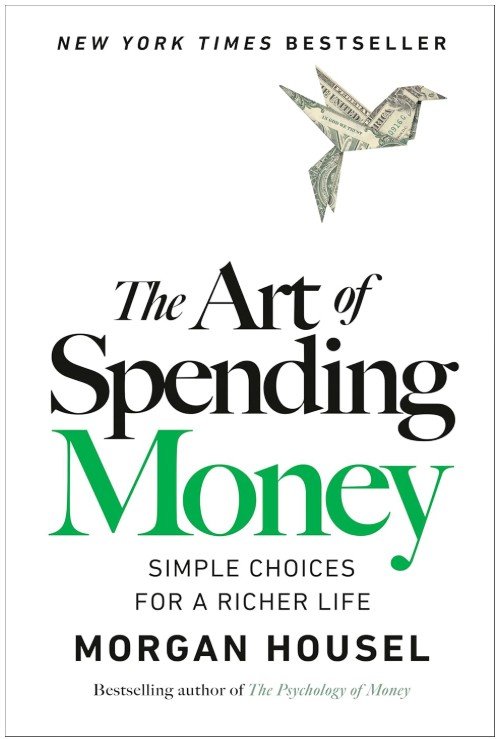
the art of spending money by Morgan Housel book cover

Simple Choices for a Richer Life

Ready to master the psychology of money in its most practical form? Dive deeper into the art of intentional spending and true wealth-building with the book that expands on everything you've read. Continue your journey to financial wisdom!

Related Post

*The information provided on this site is for general informational and educational purposes only. All content, including articles, guides, and opinions, is not intended to be, and should not be taken as, professional advice.
*Podomline may earn a small commission if you buy through these links—at no extra cost to you. Thank you

Leave a Comment

Your email address will not be published. Required fields are marked *