The 3-Step Hormone Reset: A Doctor's Plan to Burn Fat Without Counting Calories

The Primal Podcast with Dr. Jason Fung  |  January 24, 2026

You’re trying to lose weight, but the scale won’t budge. You’ve cut calories, chosen “low-fat” options, and exercised more, yet the results are fleeting or nonexistent. The standard diet advice fails because it targets the wrong biological mechanism—energy balance instead of hormonal signaling. In this article, you’ll learn why insulin is the master regulator of fat storage, discover the dietary and timing strategies that lower it naturally, and get a practical, flexible plan to finally unlock your body’s ability to burn fat.

Quick Answer: What’s the Fastest Way to Lose Weight?

The fastest, most sustainable way to lose weight is to lower your body’s insulin levels. High insulin signals your body to store calories as fat and blocks access to stored fat for energy. By focusing on when you eat (using intermittent fasting) and what you eat (minimizing processed foods and refined carbohydrates), you can lower insulin, switch your body into fat-burning mode, and reduce hunger naturally—without obsessive calorie counting.

woman is measuring her waist in her house

Why the “Calories In, Calories Out” Model is Broken

For decades, the cornerstone of weight loss advice has been a simple equation: consume fewer calories than you burn. This logic seems unassailable, but as obesity rates have skyrocketed, its failure has become undeniable. Dr. Jason Fung, a nephrologist and bestselling author of The Obesity Code, argues that this model misses the root cause entirely.

The problem isn’t an energy accounting error; it’s a hormonal dysfunction.

Think of your body not as a simple bank account, but as a sophisticated factory with foremen (hormones) giving instructions. Insulin is the chief foreman in charge of energy storage. When insulin is high, the instruction is clear: “Store incoming calories as fat.” When insulin is low, the instruction changes: “Release stored fat and burn it for energy.”

If you are constantly eating—especially foods that spike insulin—your body is perpetually in “store fat” mode. Cutting calories while insulin remains high is a losing battle. Your body, unable to access its fat stores due to the hormonal blockade, simply slows down your metabolism (calories out) to match the reduced intake. This leads to the familiar plateau, fatigue, and ravenous hunger that doom most diets.

The Real Cause of Weight Gain: Hyperinsulinemia

Obesity is not a disease of excess calories; it is a disease of excess insulin (hyperinsulinemia). Insulin’s primary job is to facilitate the storage of nutrients. After a meal, it helps shuttle glucose into cells and tells your fat cells to store fatty acids.

The modern diet, rich in refined carbohydrates and sugary, processed foods, causes frequent and severe spikes in insulin. Over time, this can lead to insulin resistance, requiring even more insulin to manage blood sugar, creating a vicious cycle of fat storage.

“If you think about weight gain, obesity as an excess of insulin… then you could say, well, how do you lower insulin? Because that sets you on the right track.”

This hormonal perspective elegantly explains common experiences:

  • Why 100 calories of cookies is not metabolically equivalent to 100 calories of broccoli.
  • Why you can feel hungry soon after a high-carb breakfast.
  • Why focusing on food quality and meal timing is more powerful than counting calories.

The Two-Pronged Strategy to Lower Insulin and Burn Fat

To effectively lose weight, you must create an environment where insulin levels can fall. Dr. Fung’s approach combines two powerful, synergistic strategies.

1. Master When You Eat: Intermittent Fasting

Fasting is simply the period when you are not eating. It is the most effective tool to lower insulin levels, allowing your body to transition from storing fat to burning it.

How It Works: During the fasting window, insulin drops. This drop is the metabolic switch that tells your body: “Okay, no new food is coming. Start using our stored energy.” It begins to break down glycogen (stored sugar) and, more importantly, starts liberating fat from your fat cells to be used for fuel.

Debunking the Myths:

  • “Breakfast is the most important meal of the day.” The “meal that breaks your fast” can happen at any time. If you’re not hungry at 7 AM, there’s no physiological need to eat.
  • “You must eat small, frequent meals to stoke your metabolism.” This advice keeps insulin perpetually elevated, locking you in fat-storage mode.
  • “Fasting will put you in ‘starvation mode.’” Short-term fasting increases metabolism and fat-burning hormones like norepinephrine. Long-term calorie restriction with high insulin is what slows metabolism.

Practical Fasting Framework:

You don’t need to start with an extreme fast. The key is to extend your natural overnight fast.

Fasting ProtocolEating WindowFasting WindowBest For
Starter12 hours12 hoursMaintaining health; a natural daily rhythm (e.g., finish dinner at 8 PM, eat breakfast at 8 AM).
Weight Loss (16:8)8 hours16 hoursEffective, sustainable fat loss (e.g., eat from 12 PM to 8 PM).
Advanced (OMAD or 24-hr)1 hour / 1 meal23 hours / 24 hoursBreaking plateaus or accelerating results for those who are adapted.

Dr. Fung’s Advice: “Every day you should have about 12 to 14 hours [of fasting]. That’s just regular… Then if you want to lose weight, you can push it up.” Experiment to find what fits your life and feels sustainable.

2. Optimize What You Eat: Ditch Processed Foods

Fasting is powerful, but if you break your fast with foods that cause an insulin spike, you undermine the benefits. Your dietary goal is to choose foods that minimize the insulin response.

The Core Principle: Eat whole, unprocessed foods. Processing often removes fiber, adds sugar, and alters food structure to make it digestible too quickly, leading to sharper insulin spikes.

Food CategoryInsulin-Spiking (Avoid/Minimize)Insulin-Friendly (Embrace)
CarbohydratesWhite bread, pastries, breakfast cereal, instant oatmeal, candy, chips.Non-starchy vegetables (broccoli, leafy greens), steel-cut oats, berries, legumes.
Proteins & FatsBreaded fried foods, processed meats with sugars.Eggs, fish, meat, poultry, avocado, nuts, seeds, olive oil.
BeveragesSoda, fruit juice, sweetened coffee drinks. Diet soda may disrupt hunger signals for some.Water, black coffee, tea. Sparkling water.

Key Insight: “It’s ultimately the processing of foods that is going to probably be the most important thing.” An apple (whole, unprocessed) is healthy and satiating. Apple juice (processed, fiber removed) is essentially sugar water that spikes insulin and is easy to overconsume.

Addressing Common Questions & Concerns

What About Calories?

Dr. Fung doesn’t deny physics. If you lose fat, you are in a “calorie deficit.” The critical question is how you achieve that deficit. Is it through white-knuckle calorie restriction while hungry and metabolically slowed? Or is it by lowering insulin so your body naturally accesses its fat stores for energy, reducing hunger and keeping your metabolism robust? The latter is sustainable and effective.

Fasting vs. Ozempic & Other Medications

GLP-1 medications like Ozempic work by mimicking a hormone that reduces appetite. Dr. Fung sees them as a different tool. The major drawback is that they often make food unenjoyable (through nausea), and weight regain is common once the medication stops if healthy habits haven’t been learned. Fasting, in contrast, is a skill that empowers you to manage your own hormones and can enhance the enjoyment of food.

Handling Side Effects When Starting

As your body shifts from burning sugar to burning fat (ketones), you may experience headaches, fatigue, or dizziness. This is often due to fluid and electrolyte shifts.

Solution: Salt your food generously and consider adding high-quality electrolytes (sodium, potassium, magnesium) to your water, especially during longer fasts.

Your Actionable Plan to Start

  1. Pick Your Fasting Window. Start with a 12-hour fast (e.g., 8 PM to 8 AM). After a week, try pushing breakfast to 10 AM for a 14-hour fast. Progress toward 16 hours as you feel comfortable.
  2. Clean Up Your First Meal. Break your fast with a meal centered on protein, healthy fats, and fiber. Example: Eggs with avocado and spinach, or a salad with grilled chicken.
  3. Eliminate One Processed Item. Swap your instant oatmeal for steel-cut oats. Replace chips with a handful of nuts. Choose whole fruit over a granola bar.
  4. Stop Snacking. Condense your eating into 2-3 satisfying meals within your window. Drink water or herbal tea between meals.
  5. Be Flexible and Cycle. You don’t have to do the same thing every day. Some days might be 14 hours, others 16. Listen to your body.

Key Takeaways

  • Insulin is the key hormone controlling fat storage. High insulin levels block fat burning and signal your body to store calories.
  • Stop focusing solely on calories. Prioritize lowering insulin through meal timing and food quality to allow your body to access stored fat.
  • Intermittent fasting is the most effective tool to lower insulin. Start by consistently fasting for 12-14 hours daily and increase the duration as needed for weight loss.
  • Not all calories are metabolically equal. 100 calories of cookies causes a vastly different insulin response than 100 calories of eggs. Choose whole, unprocessed foods.
  • Breakfast is not mandatory. Eat your first meal when you are genuinely hungry.
  • Processed foods are designed to be overeaten and cause excessive insulin spikes. They are the primary driver of hyperinsulinemia.
  • Sustainability comes from flexibility and understanding. Fasting is a natural, ancient practice that you can adapt to your life, unlike rigid, restrictive diets.

Interested in continuing the conversation? Learn How to Lose Fat and Gain Muscle with Nutrition in this complete guide.

By shifting your focus from calorie math to hormone harmony, you move from fighting your biology to working with it. The result is not just weight loss, but a fundamental improvement in your metabolic health that can last a lifetime.

Want the Full Picture? Dig Deeper with Dr. Fung’s Latest Book

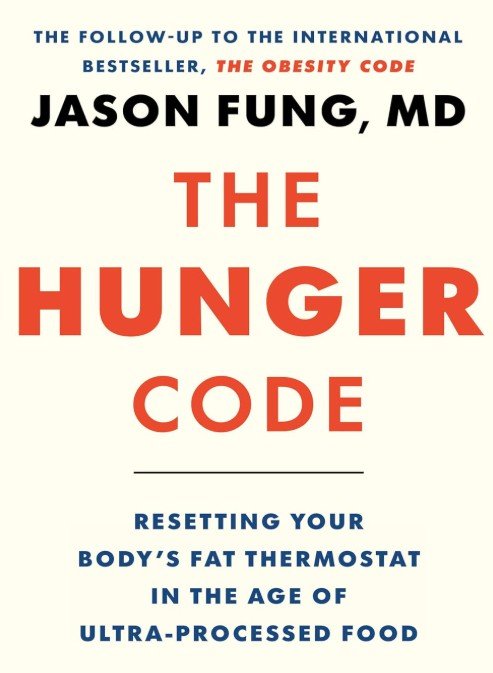
This article covers the core hormonal principles of weight loss, but there’s so much more to the story—especially about the modern food environment. For a complete roadmap on resetting your body’s signals and breaking free from ultra-processed foods, Dr. Jason Fung’s essential book, The Hunger Code, is your next must-read.

*Podomline may earn a small commission if you buy through these links—at no extra cost to you. Thank you

Related Post

Leave a Comment

Your email address will not be published. Required fields are marked *